Between Two Worlds: How Immigrant Families Are Building Their Own Classrooms at the Kitchen Table
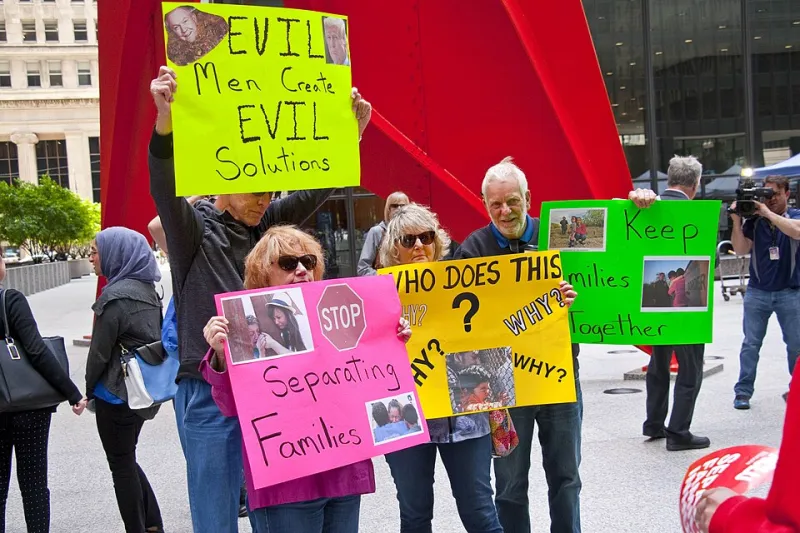
Photo: Charles Edward Miller, CC BY-SA 2.0, via Wikimedia Commons
Long before a child ever opens a textbook, many immigrant and first-generation American families are already deep into a different kind of lesson. Across the United States, kitchens, living rooms, and Sunday dinner tables have become sites of deliberate cultural transmission—places where language, memory, and identity are passed down with intention. This is the curriculum no school district funds, and no standardized test measures.
For millions of families navigating the complex terrain between their ancestral cultures and the demands of American life, the home has become a sanctuary of knowledge. It is a space where grandmothers teach the names of spices in languages that public schools do not offer, where fathers recount histories that textbooks omit, and where the act of cooking a traditional meal becomes an exercise in both chemistry and cultural memory.
What the Classroom Leaves Behind
America's public education system, for all of its reach, operates largely within the boundaries of a singular national narrative. The curricula offered in most school districts—even those in cities with rich immigrant populations—tend to reflect a mainstream cultural framework that leaves significant gaps for students whose families carry different histories, languages, and worldviews.
Research from organizations including the National Education Association has consistently shown that students from immigrant households often experience a profound disconnect between their home identities and their school identities. The consequences extend beyond academic performance. When children are asked to leave their cultural selves at the schoolhouse door, the psychological toll is measurable—and the generational cost of cultural erosion is steep.
Families across communities—Vietnamese, Haitian, Nigerian, Salvadoran, Korean, and many others—have responded not by waiting for institutions to catch up, but by constructing their own parallel systems of learning within the domestic sphere.
The Ritual as Pedagogy
In a modest apartment in Chicago's Pilsen neighborhood, a Mexican-American mother named Rosario has established what she calls las tardes de historia—the history afternoons. Every Saturday, her three children gather around the kitchen table while she prepares tamales, walking them through the process not merely as a cooking lesson but as a living connection to her mother's village in Oaxaca. She narrates as she works—explaining the significance of corn in pre-Columbian cosmology, the names of ingredients in both Spanish and Zapotec, and the stories her own grandmother told her.
"The school teaches them about Columbus," Rosario says, without bitterness but with clarity. "I teach them about what was here before Columbus."
This kind of deliberate ritual pedagogy is neither accidental nor nostalgic. It is strategic. Families like Rosario's are making conscious choices about what knowledge must be protected, recognizing that assimilation pressures—however well-intentioned—carry real risks of erasure.
Language as Lifeline
Perhaps nowhere is this educational labor more visible than in the domain of language. The United States is home to speakers of more than 350 languages, yet the dominant educational model remains stubbornly monolingual in most states. Heritage language programs exist in some districts, but they are chronically underfunded and unevenly distributed.
In response, immigrant families have developed intricate home language strategies. Some parents enforce a strict rule: only the heritage language is spoken at dinner. Others use storytelling sessions, dubbed films, and phone calls with relatives abroad to keep younger generations tethered to a linguistic inheritance that formal schooling does not reinforce.
A Haitian-American father in Miami's Little Haiti neighborhood, whose daughter attends a public school where Haitian Creole has no formal presence, describes his approach with quiet resolve. Each evening, he reads aloud from Haitian literature—poems by Georges Castera, stories rooted in the island's revolutionary history—translating and discussing as he goes. "Language is not just communication," he explains. "It is the architecture of how we think. If she loses Creole, she loses a whole way of seeing the world."
Navigating the Tension Between Preservation and Adaptation
Yet this work is not without its contradictions. The same families who are committed to cultural preservation are also, by necessity, navigating the practical demands of American life. Children must succeed in American schools, communicate in English, and eventually compete in an economy that rewards assimilation. The tension between preservation and adaptation is not theoretical—it is lived, daily, at the dinner table itself.
Many families speak candidly about the negotiations they make. A Korean-American mother in Los Angeles describes the careful balance she strikes: she insists on Korean at home, celebrates Chuseok with full traditional observance, and cooks traditional dishes on weeknights—but she also encourages her children to participate in school extracurriculars and American cultural life. "I don't want them to feel like they have to choose," she says. "I want them to hold both."
This dual holding—the refusal of an either/or framework—is itself a form of cultural sophistication that formal education rarely teaches. Children raised in this environment often develop a kind of translational intelligence: the ability to move fluidly between cultural contexts, to carry multiple identities without fragmentation.
Community Organizations as Amplifiers
While the kitchen table remains the primary site of this informal education, community organizations across the country have begun to recognize, document, and amplify what families are doing. Cultural centers, immigrant advocacy nonprofits, and heritage organizations are increasingly offering structured support—weekend language schools, oral history workshops, intergenerational storytelling programs—that extend the domestic curriculum into a broader communal framework.
Organizations such as the Arab American National Museum in Dearborn, Michigan, and the Wing Luke Museum of the Asian Pacific American Experience in Seattle have developed programs explicitly designed to honor and strengthen the informal educational work that immigrant families already perform. These institutions understand that their role is not to replace what happens at home, but to provide it with visibility, resources, and community connection.
The Larger Stakes
The significance of what immigrant families are doing at their kitchen tables extends well beyond individual households. At a moment when American cultural identity is being fiercely contested—when debates over history, language, and belonging are playing out in school board meetings and legislative chambers—these families are quietly, persistently doing the work of cultural democracy.
They are asserting that the American story is not a single narrative with a single language and a single set of heroes. They are teaching their children that knowledge can live in a recipe, in a lullaby, in the way a grandmother holds her hands while she prays. And they are doing so with a conviction that no curriculum committee approved and no standardized assessment will ever fully capture.
The dinner table, it turns out, has always been one of America's most radical classrooms. The families who gather there each evening—navigating two worlds, holding two languages, honoring two sets of stories—are not simply preserving the past. They are shaping what this country's future will know about itself.