Keepers of the Word: How Black Podcasters Are Rebuilding the Archive of Living Memory
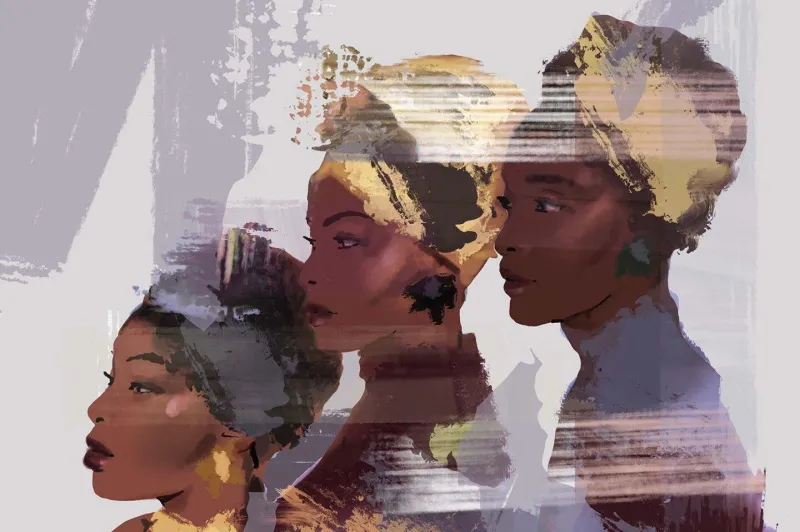
Photo: Black woman podcaster recording microphone studio storytelling, via www.annmariejohn.com
The Voice as Archive
Long before the written word was the dominant vessel of knowledge, there were those appointed to carry history in their voices. In West African societies, the griot — a hereditary keeper of oral tradition — served as genealogist, musician, counselor, and community conscience all at once. To be a griot was not simply to be a performer; it was to be entrusted with the living record of a people.
That tradition did not vanish when African men and women were forced across the Atlantic. It adapted, survived, and eventually found new vessels: the church sermon, the barbershop conversation, the blues lyric, the spoken word stage. Today, it is finding yet another form — the independent podcast — and the women and men behind the microphone are doing something that mainstream media has rarely permitted them to do: speak without mediation.
A Medium That Belongs to No One
What makes the podcast an especially significant platform for Black cultural expression is precisely its structural openness. Unlike broadcast radio, which requires licenses, capital, and institutional gatekeeping, or television, which has historically reflected the demographics of its ownership class, podcasting demands relatively little in terms of infrastructure. A quality microphone, an audio editing application, and a hosting subscription can be enough to reach tens of thousands of listeners across the country and the world.
This accessibility has not gone unnoticed. Over the past decade, Black-hosted podcasts have grown into a formidable segment of American audio culture. Shows covering Black history, political philosophy, family lineage, spiritual practice, and speculative futures have cultivated audiences that are not passive consumers but active participants — listeners who send financial support through platforms like Patreon, who gather in community Discord servers, who attend live tapings as though attending a revival.
The analogy to revival is not accidental. For many of these podcasters, the work carries a spiritual dimension that transcends entertainment. "I feel an obligation," said one Atlanta-based host of a show dedicated to reconstructing the histories of Black towns across the American South. "There are stories that exist nowhere in print. If I don't record them, they disappear with the last person who remembers."
Shaping the Narrative From Within
Central to this movement is the question of interpretive authority — who gets to decide what a community's history means, and for whom. For generations, Black American history has been filtered through institutions, textbooks, and media outlets that were built by and for a different audience. The stories that survived that filtration were often those that served a particular national mythology: the sanitized civil rights timeline, the exceptional individual who overcame, the tragedy that resolved into progress.
Independent Black podcasters are disrupting that editorial logic entirely. They are recovering the stories that did not survive the filter — the mutual aid societies of Reconstruction, the intellectual traditions of the Black press, the political philosophies that were deemed too radical for the mainstream record. They are also doing something equally important: insisting that the ordinary lives of ordinary Black Americans are worthy of the archive.
One Brooklyn-based duo hosts a weekly show dedicated entirely to the intellectual history of Black women in the United States, drawing on obscure journals, forgotten speeches, and interviews with scholars whose work rarely reaches popular audiences. Their listenership has grown steadily for three years without a single major media partnership. They fund their work through community subscriptions and occasional live events, maintaining full editorial independence as a matter of principle.
"The moment we take a corporate sponsor whose interests conflict with what we're trying to say, we've compromised the whole project," one of the co-hosts explained. "Our listeners know that. It's part of why they trust us."
The Economics of Cultural Sovereignty
That trust is, in fact, an economic model — and a surprisingly durable one. The relationship between independent Black podcasters and their audiences frequently resembles the patronage structures of earlier cultural movements more than the advertising-dependent logic of commercial media. Listeners who feel genuinely served by a show — who feel seen, educated, and connected to something larger than themselves — often become consistent financial supporters.
This dynamic has allowed a number of Black-led audio productions to operate sustainably without surrendering creative control. Some have used their platforms to launch broader cultural enterprises: book clubs, educational curricula, community events, and even small publishing imprints. The podcast, in these cases, is not simply a show. It is an organizing infrastructure.
Nonprofit cultural organizations have begun to take notice. Several community foundations and arts advocacy groups across the country have started directing grants toward independent Black audio producers, recognizing that these platforms are performing work — documentation, education, cultural preservation — that has historically fallen to institutions with far greater resources and far less community accountability.
The Responsibility of the Living Record
With the authority of the griot, however, comes the griot's burden. The podcasters who have assumed this role with the greatest seriousness speak openly about the weight of it. To be trusted as a cultural authority by tens of thousands of people is not a position that can be held carelessly. Accuracy matters. Rigor matters. The willingness to correct the record when wrong matters.
Several of the most respected figures in this space have developed formal research practices that would not be out of place in a university archive. They cite their sources. They interview primary witnesses. They acknowledge the limits of what is knowable. In doing so, they are modeling a form of public intellectual life that is both deeply rooted in tradition and thoroughly contemporary in its execution.
The griot did not simply repeat what was comfortable. The griot told the community what it needed to hear, preserved what it could not afford to forget, and imagined what it might yet become. The podcasters who have inherited that function are doing the same — one episode at a time, for an audience that is listening with its whole attention.
In an era when the dominant information systems seem increasingly designed to distract, that quality of attention is itself an act of cultural resistance.