Around the Table, Against the Noise: How Intentional Family Conversations Are Becoming Acts of Cultural Preservation

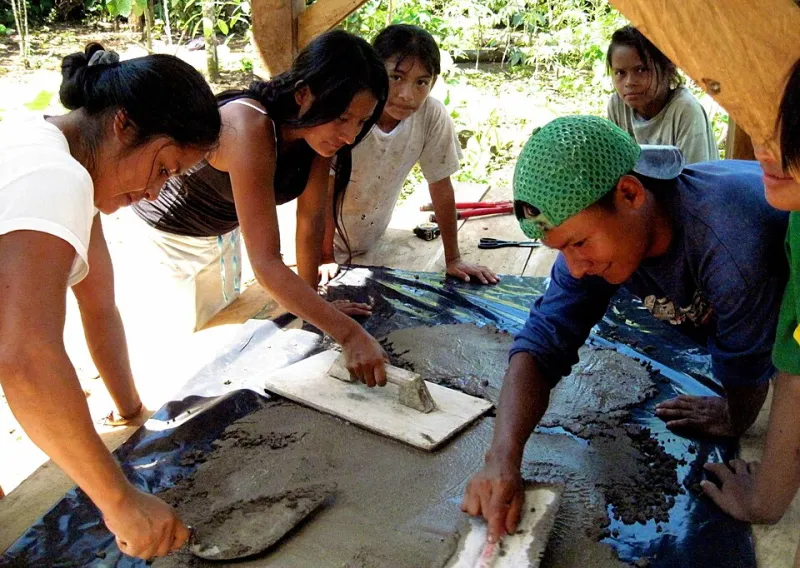
Photo: multigenerational family talking together at dinner table no phones, via i.pinimg.com
There is a particular kind of silence that settles over a household when everyone has retreated to their own device. It is not peaceful. It is, for many American families, a slow erasure — of dialect, of memory, of the particular cadence of a grandmother's voice recounting something that no algorithm will ever think to surface.
In communities from the Mississippi Delta to the immigrant enclaves of Chicago's South Side, a countervailing movement is taking shape. It is unglamorous and largely unsponsored. It happens over reheated rice and folding chairs, in living rooms that smell of candles and old wood. Families are choosing, deliberately and sometimes defiantly, to talk to one another — and to treat those conversations as something worth preserving.
The Quiet Radicalism of Listening
To frame intentional family conversation as a form of cultural resistance may sound like an overstatement. It is not. When commercial media determines whose stories circulate and whose are rendered invisible, the act of narrating one's own life — and ensuring that narrative reaches the next generation — becomes genuinely political.
Dr. Amara Osei, a cultural anthropologist at Spelman College who studies oral tradition in Black American families, describes this dynamic with precision. "The dinner table has historically been one of the few spaces that institutions could not fully colonize," she explains. "When families stop using it for conversation, they are not simply losing a quaint habit. They are ceding the last truly autonomous space for cultural transmission."
This framing resonates with the work of organizations like StoryCorps, which has spent two decades dispatching recording booths to underserved communities, and with dozens of smaller, neighborhood-level initiatives that rarely receive national attention. What these efforts share is a conviction that ordinary people possess extraordinary archives — and that those archives are at risk.
Profiles in Deliberate Memory
In Albuquerque, New Mexico, a multigenerational Chicano family has developed what they call "the Wednesday practice." Every week, the eldest member of the household poses a single question — drawn from a handwritten index card box accumulated over years — and each person at the table is expected to respond without interruption. Questions range from the practical ("What is the hardest thing you learned from watching your parents work?") to the philosophical ("What do you believe that you cannot yet prove?"). The family began recording these sessions two years ago, and they now constitute an informal oral history spanning four generations.
The practice was not born from any formal program. It grew from a grandmother's frustration that her grandchildren could recall the plots of streaming series in granular detail but could not name the town in Chihuahua where she was born.
In Detroit, the nonprofit organization Roots & Routes has taken a more structured approach. Founded in 2019 by a coalition of educators and community organizers, the group runs what it calls "Narrative Kitchens" — facilitated gatherings in which families from the city's African American, Arab American, and Latinx communities are given prompt cards, recording equipment, and a trained facilitator who helps them navigate conversations that might otherwise stall or veer into conflict. To date, more than three hundred families have participated, and the organization has archived over twelve hundred hours of recorded conversation.
"We are not trying to produce documentaries," says Roots & Routes co-founder Lena Habib. "We are trying to produce witnesses. People who can say, 'I heard this from my father's own mouth, and I will carry it forward.'"
What Gets Lost, and What Gets Saved
The stakes of this work become clearer when one considers what disappears in the absence of intentional transmission. Language is the most visible casualty. The Pew Research Center has documented a steady generational decline in heritage language fluency among immigrant families — a pattern that accelerates dramatically when families do not create structured contexts for speaking those languages at home.
But the losses extend beyond vocabulary. Emotional epistemologies — the particular ways a community has learned to process grief, celebrate achievement, or navigate conflict — are also transmitted through conversation, and they erode just as quietly. When those frameworks disappear, younger generations are left to construct meaning from whatever cultural scaffolding the market provides, which is to say, from very little that serves their actual lives.
The organizations and families doing this work are not anti-technology in any simplistic sense. Many of them use smartphones to record conversations, shared drives to store audio files, and social media to connect with others engaged in similar projects. The distinction they draw is between technology as a tool for amplification and technology as a substitute for presence.
A Framework for Beginning
For readers who wish to initiate this practice in their own households, those already engaged in the work offer several concrete suggestions.
First, lower the threshold for entry. A conversation does not need to be recorded, facilitated, or formally structured to have value. The goal, initially, is simply to create a regular occasion for unhurried exchange. A weekly dinner with phones placed in another room is a sufficient beginning.
Second, use prompts deliberately. Open-ended questions that invite personal history — "What was the neighborhood like when you were growing up?" or "What is something you wish someone had told you when you were my age?" — tend to generate richer responses than questions that can be answered with a single word.
Third, treat listening as a skill requiring cultivation. Many families find that the most significant barrier to meaningful conversation is not reticence on the part of the speaker but impatience on the part of the listener. Teaching younger family members to ask follow-up questions, to tolerate silence, and to resist the urge to redirect the narrative is itself a form of education.
Finally, consider documentation not as the point but as a gift. A simple voice recording, clearly labeled and stored somewhere accessible, transforms a fleeting exchange into a durable artifact. The families who have been doing this longest speak of their recordings with a reverence that is entirely unsentimental — as practical resources, consulted when decisions need to be made or when grief requires context.
The Larger Argument
What the dinner table movement ultimately argues — and it is an argument, even if it is made in quiet rooms rather than public squares — is that culture is not produced by institutions. It is produced by people in relationship with one another, and it requires the conditions for that relationship to flourish.
In a country where those conditions are increasingly difficult to sustain — where economic precarity fractures households, where attention is perpetually monetized, and where the stories most widely circulated are those that serve someone else's interest — the deliberate act of gathering and speaking and listening carries a weight that exceeds its modest form.
The families who have chosen this practice are not waiting for a cultural institution to validate their stories. They are, in the most literal sense, taking the matter into their own hands.