Rehearsing the World We Want: How Community Theater Is Becoming a Laboratory for Democratic Life
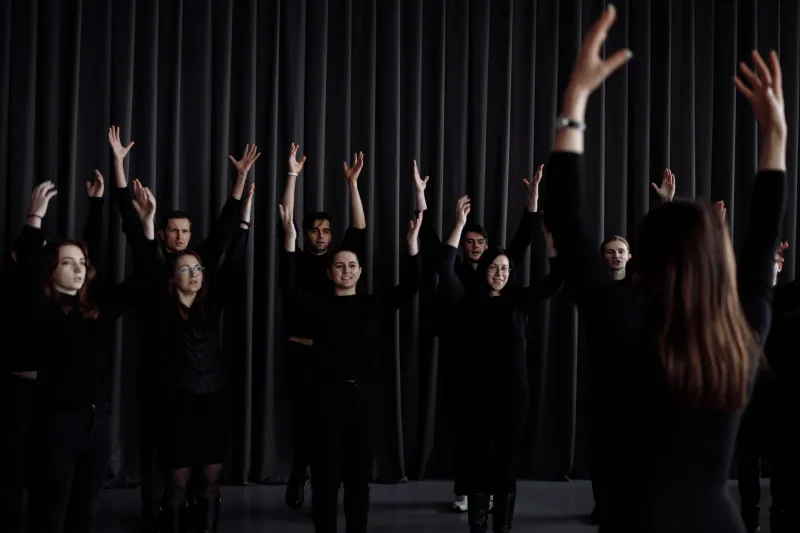
The folding chairs were still warm from the Sunday service when the cast of a South Side Chicago ensemble began arranging them into a rough semicircle. No raised stage. No lighting rig. No program notes printed on cardstock. What followed over the next ninety minutes was something that defied easy categorization — part performance, part town hall, part collective exhale.
This is community theater in its most essential form, and it is happening with increasing frequency and intention in cities and towns across the United States. Far removed from the polished regional productions that dominate cultural coverage, these grassroots ensembles are staking a different kind of claim — not to theatrical prestige, but to democratic space itself.
The Stage as Commons
For much of American cultural history, performance has been understood as something delivered to an audience by trained professionals. Community theater, when it has been acknowledged at all, has often been treated as a charming but lesser cousin to the real thing. That framing, argue many ensemble directors working today, misses the point entirely.
"We are not trying to replicate Broadway in a church hall," says Marcus Tillman, artistic director of the Detroit-based Threshold Collective, which has spent the past six years producing original work in neighborhoods that have experienced acute disinvestment. "What we are doing is giving people a structured way to tell the truth about where they live, what they have survived, and what they still believe is possible."
Tillman's ensemble develops its scripts through months of community listening sessions before a single line of dialogue is written. Residents — many of whom have never attended a theatrical performance, let alone participated in one — are invited to share stories, grievances, and visions. The resulting productions are, in a very real sense, authored by the community itself.
This methodology has roots in the tradition of Theatre of the Oppressed, developed by Brazilian theater practitioner Augusto Boal in the 1970s, which conceived of performance as a rehearsal for social transformation. What American community ensembles are doing now draws on that legacy while grounding it in specifically local contexts: displacement caused by gentrification, the aftermath of police violence, the erosion of shared civic institutions, and the persistent hunger for spaces where ordinary people feel genuinely heard.
Processing What Policy Cannot
In the wake of collective trauma, communities often find themselves with inadequate formal structures for processing grief and anger. City council meetings run on Robert's Rules of Order. Town halls collapse into shouting. Therapy remains financially inaccessible for millions. Theater, these ensembles argue, occupies a unique and underutilized position in that gap.
"There are things people cannot say in a community meeting that they can say in a scene," explains Renata Solis, co-director of Palabra y Acción, a bilingual ensemble based in San Antonio that works primarily with recently arrived immigrant communities. "When you give someone a character, even a character that is basically themselves, something opens up. The distance of fiction makes the truth bearable enough to speak."
Solis describes a recent production that dramatized the experience of families navigating the immigration court system. The ensemble included participants who had personally endured deportation proceedings, as well as legal advocates, interpreters, and second-generation youth grappling with questions of belonging. The performance was held in a community center and attended by more than two hundred people, many of whom remained for nearly two hours of structured conversation afterward.
"That conversation," Solis says, "was the real performance."
Reclaiming Space, Literally
The choice of venue in community theater is rarely incidental. Many ensembles deliberately perform in locations that carry civic or historical weight — shuttered storefronts, vacant lots that were once neighborhood gathering places, libraries whose hours have been cut, school auditoriums that sit dark on weekends. The act of filling these spaces with bodies and voices is itself a form of advocacy.
In Baltimore, the ensemble Groundwork Theater has staged productions inside a former recreation center that the city closed more than a decade ago due to budget cuts. The building still belongs to the public, technically, and the ensemble obtained a temporary use permit after a sustained campaign. Performing there, says founding director Josephine Carr, sends a message that no press release could.
"When two hundred people show up to a building that the city said was no longer worth maintaining, and they laugh together and cry together and then walk home talking about what they just experienced — that is a civic act," Carr says. "That is people insisting that this space still belongs to them."
The ensemble has since partnered with a local housing advocacy organization, and the productions have become an organizing tool, drawing in residents who might never attend a traditional meeting but who are willing to come out for a story.
Solidarity Across Divides
Perhaps the most ambitious aspiration of many community theater ensembles is the possibility of building genuine solidarity across lines of difference. In a cultural moment defined by fragmentation and mutual suspicion, the shared vulnerability of performance — of witnessing and being witnessed — creates conditions for connection that other civic formats struggle to replicate.
The Mosaic Ensemble in Minneapolis has made this its central mission. The company brings together participants from distinct and sometimes historically antagonistic communities — Somali immigrants and longtime Black residents, Native youth and white working-class families from exurban areas — and asks them to make something together before they are asked to agree on anything.
"You do not build solidarity through argument," says ensemble co-founder David Okafor. "You build it through shared experience. Theater gives us a shared experience that is also honest about conflict. We are not pretending the differences do not exist. We are putting them on stage and asking: what do we do with this?"
A Different Measure of Success
None of the ensemble directors interviewed for this article measure their work primarily by audience size, critical response, or production value. The metrics that matter to them are different: Did participants feel ownership over the story? Did the performance generate conversation that continued beyond the final bow? Did someone who had never before spoken publicly about their experience find their voice?
These are not easy things to quantify, which creates ongoing challenges in a funding landscape that often demands measurable outcomes. Many community ensembles operate on shoestring budgets, relying on foundation grants, small individual donations, and the donated labor of committed artists. The precarity is real, and it is worth naming.
And yet the ensembles persist, and they are multiplying. Because the need they are meeting — the need to be seen, to tell one's own story, to imagine collectively — is not a cultural luxury. It is, as these theater makers understand it, a democratic necessity.
In the South Side church basement, as the cast took their final bow and the folding chairs scraped back across the linoleum, an older woman in the third row sat for a long moment before standing. She had not been in the production. She was, in every conventional sense, a member of the audience. But she had wept, and laughed, and at one point called out in recognition at something a character said. She had participated.
That, perhaps, is the whole point.