Tuning Out the Platform: How Neighborhood Music Circles Are Restoring the Soul of Live Performance
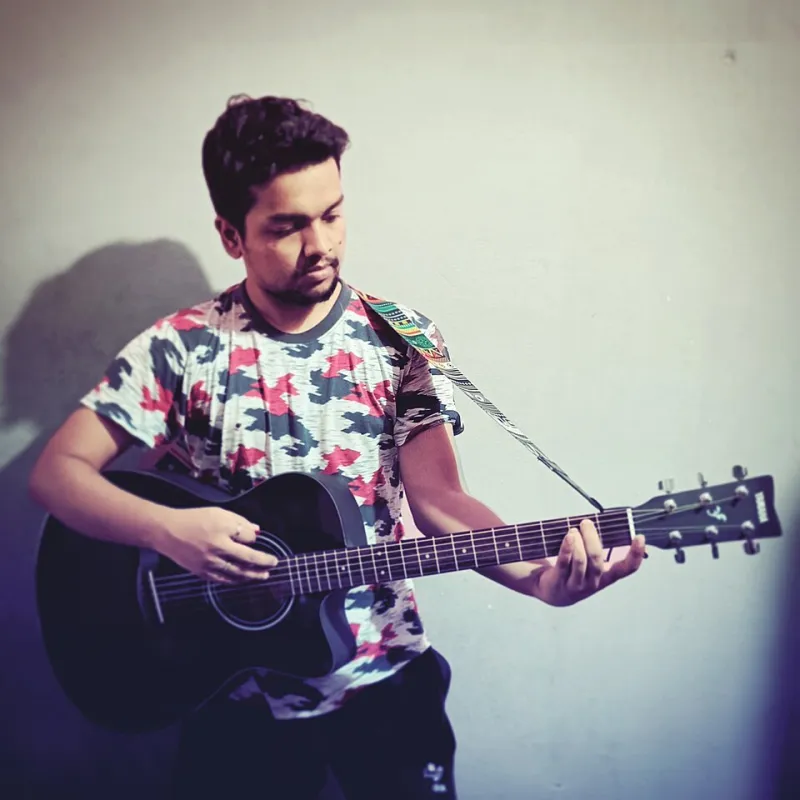
Photo: Santhosh411kn, CC BY-SA 4.0, via Wikimedia Commons
There is a particular kind of silence that falls over a room just before a musician begins to play — not the silence of headphones or algorithmic queues, but the silence of shared anticipation. It is a silence that streaming platforms, for all their computational sophistication, have never been able to manufacture. And it is precisely that silence — that irreducible, communal hush — that a growing number of Americans are working to protect.
From converted living rooms in East Nashville to cooperative performance halls in Portland's Alberta Arts District, a grassroots movement is quietly but deliberately pushing back against the consolidation of musical culture into the hands of a few dominant digital intermediaries. These are not nostalgic retreats into the past. They are deliberate, organized acts of cultural reclamation — and they are reshaping how communities think about art, ownership, and economic justice.
The Economics of Erasure
To understand why these circles are forming, it helps to understand what has been lost. Over the past decade, streaming platforms have fundamentally restructured the economics of musical labor. A musician who generates one million streams on a major platform may earn less than four thousand dollars. Meanwhile, the platforms themselves report billions in annual revenue. The math is not merely unfavorable — it is, many artists argue, structurally exploitative.
Beyond the financial calculus, streaming culture has altered the very nature of listening. Music has become ambient, shuffled, and algorithmically curated to maximize engagement rather than meaning. The relationship between artist and audience — once defined by presence, risk, and reciprocity — has been mediated into near-invisibility.
"When someone pays eight dollars a month to access thirty million songs, the individual artist becomes invisible," says Marisol Fuentes, a guitarist and co-founder of La Sala Común, a community listening room operating out of a renovated storefront in Chicago's Pilsen neighborhood. "We wanted to create a space where the artist is the entire point — where the audience shows up specifically for one person, one set of songs, one night."
La Sala Común charges a sliding-scale admission of ten to thirty dollars per event, with eighty percent of proceeds going directly to the performing artist. The remaining twenty percent funds operating costs, instrument repair resources, and a small grant fund for emerging local musicians. Since opening three years ago, the space has hosted over two hundred performances and distributed more than forty thousand dollars directly to artists.
Circles, Not Stages
What distinguishes many of these new venues from conventional concert spaces is their deliberate rejection of the performer-audience hierarchy that defines mainstream music culture. Several organizations have adopted the folk circle model — a format in which musicians and listeners sit together in a rough circle, passing songs around the room, with no amplification and no separation between stage and floor.
In Asheville, North Carolina, the Blue Ridge Song Circle has been meeting monthly in a church fellowship hall for seven years. What began as an informal gathering of a dozen traditional Appalachian musicians has grown into a rotating community of nearly two hundred participants, many of whom had never previously considered themselves musicians.
"The circle format is politically significant," says organizer and banjo player Delmont Hayes. "When there's no stage, there's no hierarchy. Everyone's voice counts the same. That's not just a musical philosophy — it's a democratic one."
Hayes is careful to connect the circle's cultural practices to broader civic values. The organization partners with local schools, immigrant services organizations, and a regional labor union to offer free instrument lending and music education workshops. For many participants, the circle has become a site of community building that extends well beyond the music itself.
Cooperative Ownership as Cultural Infrastructure
Perhaps the most structurally ambitious expressions of this movement are the cooperatively owned music venues emerging in several American cities. These spaces — owned collectively by their members, which typically include both artists and community stakeholders — represent an attempt to embed the values of economic democracy directly into cultural infrastructure.
The Commonplace Music Hall in Minneapolis opened in 2021 as a worker-and-community cooperative with forty founding members. Each member purchased a modest equity share, and governance decisions — from booking policies to ticket pricing — are made by member vote. The hall deliberately books artists who have been locked out of mainstream venues: older musicians without social media followings, performers who sing in languages other than English, experimental artists whose work resists easy categorization.
"The dominant music industry selects for what is marketable to the broadest possible audience," says Priya Nandakumar, one of the hall's founding members and its current booking coordinator. "We select for what is meaningful to our specific community. Those are entirely different criteria, and they produce entirely different culture."
The Commonplace has also pioneered a "community listening fund" — a small pool of money contributed by audience members who can afford to give more than the ticket price, used to subsidize admission for those who cannot. Since its launch, the fund has enabled more than eight hundred low-income residents to attend performances they otherwise could not have afforded.
The Analog as Resistance
It would be a mistake to characterize this movement as purely technophobic. Many of its participants use digital tools strategically — maintaining email lists, sharing recordings of performances, coordinating logistics through messaging platforms. What they resist is not technology per se, but the subordination of cultural life to technological systems designed primarily to extract value rather than create it.
"Analog-first doesn't mean anti-digital," explains Fuentes. "It means that the human encounter comes first. The technology serves the relationship, not the other way around."
This distinction matters because it clarifies the movement's deeper ambition. These listening rooms, folk circles, and cooperative halls are not simply offering an alternative entertainment option. They are proposing an alternative model of what culture is for — one in which music functions as a form of communal practice, economic solidarity, and civic participation rather than a passive consumption product delivered by algorithm.
What Presence Makes Possible
At a recent gathering at La Sala Común, a young singer-songwriter named Tomás Reyes performed a forty-minute set to an audience of thirty-five people seated in folding chairs arranged in a loose semicircle. At the end of the set, several audience members remained to speak with him directly — about the songs, about their own experiences, about what the music had opened in them. A jar near the door held cash contributions beyond the ticket price. Reyes left that evening with more money than he had earned from three months of streaming.
But the financial dimension, while significant, was clearly not the whole of what had occurred. Something less quantifiable had taken place in that room — a recognition, a presence, a form of attention that no platform had yet found a way to monetize, precisely because it could not be extracted from the specific bodies gathered in that specific space.
This, ultimately, is what the movement is protecting: not merely the livelihoods of individual artists, but the irreplaceable experience of culture as something made together, in the same room, at the same moment — and the communities that such experiences, over time, make possible.