When the Pews Empty, the People Fill Them: Repurposed Houses of Worship as Engines of Civic Life
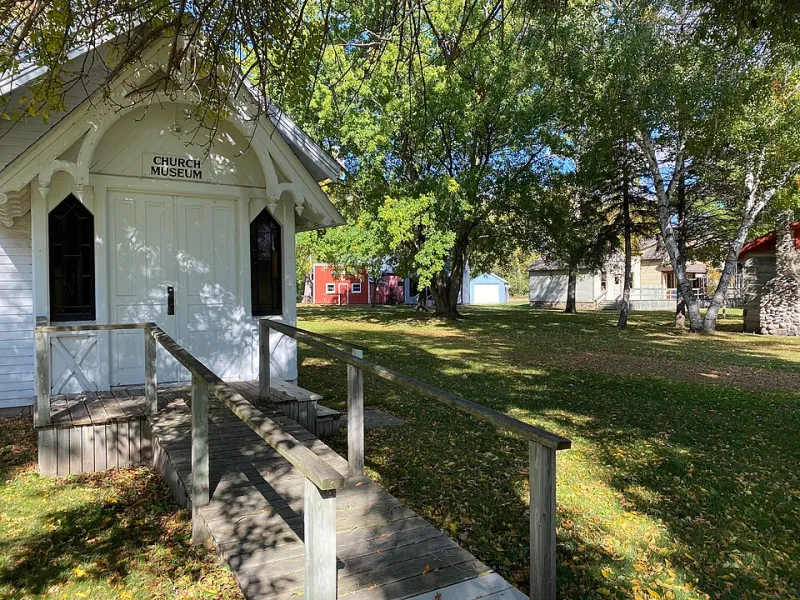
Photo: Myotus, CC BY-SA 4.0, via Wikimedia Commons
The stained glass is still there. So are the arched ceilings, the worn oak floors, and the faint smell of candle wax that no amount of renovation seems to fully dispel. But where a congregation once gathered each Sunday morning in this former Methodist church in Detroit's Corktown neighborhood, something entirely different now takes place: a weekly farmers market, a community legal clinic, and on Thursday evenings, a meeting of a tenant rights organizing coalition.
The building, renamed the Corktown Commons, has not abandoned its original purpose so much as expanded it. "This space was always meant to serve people," says its executive director, a Detroit native who spent fifteen years working in community development before taking on the project. "We're just serving different needs now."
A National Reckoning With Empty Sanctuaries
The United States is in the midst of a profound and largely underpublicized architectural transition. Decades of declining religious participation, accelerated by demographic shifts, the departure of younger generations from organized faith, and the financial pressures of maintaining aging buildings, have left thousands of churches, synagogues, mosques, and temples across the country vacant or in severe disrepair.
According to researchers at the Faith Communities Today project, the median American congregation now numbers fewer than sixty-five regular participants—a figure that makes sustaining large historic sanctuaries economically untenable for many communities. In cities like Cleveland, Baltimore, Philadelphia, and St. Louis, the phenomenon is particularly acute. Entire neighborhoods contain multiple shuttered religious buildings within walking distance of one another, their architectural grandeur incongruous with boarded windows and overgrown entryways.
The question of what becomes of these spaces is not merely logistical. It is a question about community identity, historical memory, and the future of public gathering in American life.
From Altar to Archive: New Purposes Taking Root
Across the country, a diverse range of organizations—nonprofits, municipal governments, community land trusts, and arts collectives—have begun to answer that question with creative ambition. The conversions vary widely in scale and scope, but they share a common thread: the conviction that buildings designed for communal gathering retain a particular power when returned to communal use.
In Minneapolis, a former Lutheran church now houses a cooperative grocery store serving a food-insecure neighborhood that had been without a full-service supermarket for years. The nave, with its soaring ceiling and generous floor plan, proved ideal for retail use, and the congregation's fellowship hall was converted into a community kitchen offering cooking classes and catering training for low-income residents.
In New Orleans, a shuttered Catholic church in the Tremé neighborhood—one of the oldest African American communities in the country—has been reimagined as a performance and rehearsal space for local musicians and cultural organizations. The project, led by a Black-led arts nonprofit, was deliberate in its framing: the building sits blocks from Congo Square, the historic site of enslaved African cultural gatherings, and the organization views its work as a continuation of that legacy of resilient public expression.
In Chicago's Pilsen neighborhood, a former Czech Catholic parish has been converted into a bilingual community center and immigrant services hub, operated by a Mexican American cultural organization that has served the neighborhood for three decades. The building's murals, painted by local artists, blend Czech Catholic iconography with Mexican folk art traditions—a visual testament to the layered histories of a neighborhood in perpetual transition.
What Is Preserved, What Is Transformed
The repurposing of religious architecture raises genuine questions about preservation—architectural, historical, and spiritual. These buildings were not designed as neutral containers. They were built to orient the human spirit, to create specific emotional and sensory experiences, to mark time and transition. Their proportions, their light, their acoustics, and their ornamentation carry meaning that does not simply evaporate when the last congregation departs.
Preservationists, community historians, and former congregation members often have complicated feelings about these transformations, even when they support the new uses. For many communities, particularly communities of color and immigrant communities, the loss of a congregation's physical home carries grief that deserves acknowledgment.
The most thoughtful repurposing projects engage directly with this complexity. They commission oral history projects to document the building's religious history. They preserve architectural elements that carry cultural significance. They invite former congregation members into governance structures and programming decisions. They treat the building not as a blank slate but as a palimpsest—a surface written over but never entirely erased.
"We didn't want to pretend this was just a building," says the director of a Baltimore organization that converted a historic African American Baptist church into a community archive and cultural center. "It was a place where people got married and buried their parents and found their voices during the civil rights movement. We have an obligation to that history."
Architecture as Civic Infrastructure
Beyond the individual stories of specific buildings, the broader trend of religious space repurposing points toward a significant opportunity for civic infrastructure investment. American cities have long struggled to provide adequate community gathering space, particularly in lower-income neighborhoods where commercial real estate pressures make community-oriented use financially impossible.
Historic religious buildings, often debt-free and architecturally suited to large-scale gathering, represent an extraordinary asset—one that community land trusts and mission-driven nonprofits are increasingly positioned to steward. Several cities, including Philadelphia and Detroit, have developed formal programs to facilitate the transfer of vacant religious properties to community organizations, recognizing that the alternative—demolition or private development—forecloses possibilities that cannot easily be recovered.
Advocates argue that public investment in these transitions is not merely culturally desirable but economically rational. A community center that provides legal services, food access, cultural programming, and civic organizing reduces downstream costs across multiple public systems while building the social cohesion that is the foundation of neighborhood resilience.
The Sacred That Remains
There is something worth sitting with in the image of a former sanctuary repurposed as a site of civic struggle. The architecture of worship—its scale designed to humble, its light designed to inspire, its acoustics designed to amplify the human voice—turns out to be remarkably well suited to the work of social change.
Perhaps that is not entirely coincidental. The great social movements of American history have always found their organizational and spiritual home in houses of worship. The Black church, in particular, has served simultaneously as sanctuary, school, political headquarters, and cultural institution throughout American history—a reminder that the boundaries between the sacred and the civic have always been more porous than secular modernity tends to assume.
When a shuttered church becomes a food cooperative, or a vacant synagogue becomes an organizing center, something is lost. But something, too, is continued. The building that once gathered people around a shared vision of the transcendent now gathers them around a shared vision of the possible. In both cases, it is doing exactly what it was built to do.