The Generosity Underground: How Americans Are Building Care Networks That Defy the Dominant System
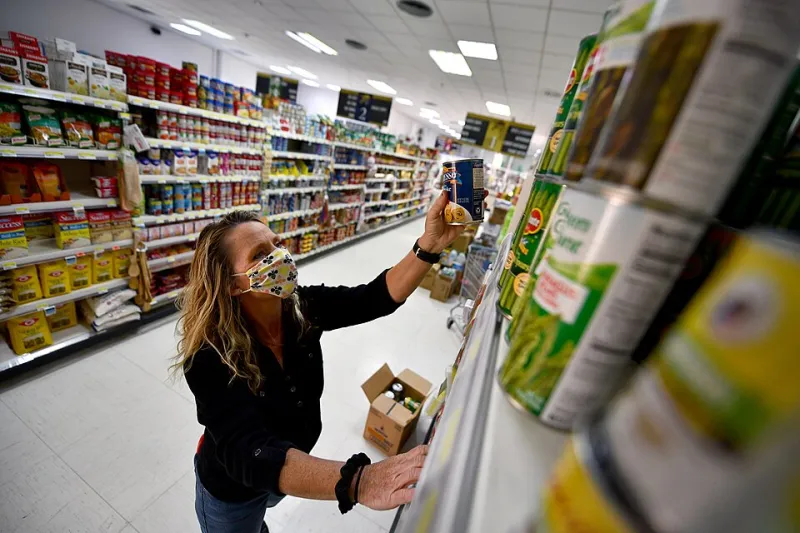
Photo: U.S. Army photo by Jason Johnston, Public domain, via Wikimedia Commons
Let us be honest about what the dominant American social contract has asked of its most vulnerable citizens: endure. Navigate a labyrinthine bureaucracy to access inadequate benefits. Compete for housing in a market rigged against renters. Absorb the cost of a healthcare system that treats illness as a financial transaction. And do all of this, please, with gratitude and without complaint.
A growing number of Americans have decided to stop waiting for that contract to be renegotiated and to build something different in the meantime.
They are doing it with surplus vegetables left in wooden boxes on street corners. With spreadsheets tracking who has a car and who needs a ride to a medical appointment. With neighborhood text chains where someone can ask for diapers at midnight and receive them by morning. What looks, from the outside, like simple neighborliness is, in practice, an emerging architecture of mutual dependence—and it carries a political charge that its participants are increasingly willing to name.
What Mutual Aid Actually Means
The term "mutual aid" has gained significant traction in recent years, particularly in the wake of the COVID-19 pandemic, when formal institutions visibly failed to meet the scale of human need. But the concept is far older than its current moment of visibility. It draws from anarchist political philosophy, from the cooperative traditions of labor movements, from the survival networks that Black communities built under Jim Crow, and from the Indigenous practices of reciprocal care that predate the nation itself.
At its core, mutual aid rests on a distinction that its practitioners consider essential: it is not charity. Charity flows in one direction—from the resource-rich to the resource-poor—and it typically reproduces the power dynamics it purports to address. Mutual aid, by contrast, operates on the principle of interdependence. Everyone in the network is understood to have something to offer and something to need, even if what they offer and what they need are different things at different times.
This philosophical distinction has real structural implications. Mutual aid networks tend to be non-hierarchical, to resist the professionalization of care, and to explicitly reject the means-testing and stigma that characterize so many formal assistance programs. You do not have to prove your worthiness to receive from a community fridge. You do not have to document your income to join a time bank.
Community Fridges and the Politics of Feeding People
The community fridge movement—in which publicly accessible refrigerators stocked by community members provide free food to anyone who needs it—has proliferated dramatically since 2020. Cities including New York, Los Angeles, Detroit, New Orleans, and dozens of smaller municipalities now host networks of community fridges, often painted in vivid murals and maintained by rotating volunteer crews.
The governing philosophy of these fridges is deliberately simple: take what you need, leave what you can. That simplicity is, in itself, a political statement. It declines to sort people into deserving and undeserving categories. It refuses the transactional logic that governs most food assistance programs. And it operates entirely outside the institutional frameworks—government agencies, nonprofit bureaucracies, corporate food banks—that have long mediated the relationship between surplus and need.
Organizers in Detroit, where community fridges have become embedded in neighborhood life, describe them as more than food distribution points. They are gathering places, relationship builders, and visible demonstrations that another way of organizing community resources is possible.
Time Banking and the Reimagined Economy of Care
If community fridges represent one node in the emerging care economy, time banking represents something more architecturally ambitious: an alternative economic system built entirely on the currency of human time.
In a time bank, one hour of any member's labor—regardless of the market value conventionally assigned to that labor—is worth one time credit. A retired attorney who helps a neighbor draft a letter earns the same credit as a teenager who rakes leaves. A professional chef who teaches a cooking class accumulates the same currency as someone who offers rides to the pharmacy.
Time banks have been operating in the United States for decades, but their current expansion reflects a growing appetite for economic relationships that are not mediated by the dollar. The hOurworld network and TimeBanks USA together support hundreds of local exchanges, with particularly strong concentrations in communities that have experienced sustained economic disinvestment. In these contexts, time banking is not merely an alternative lifestyle experiment. It is a practical response to the reality that market wages have failed to provide economic security for millions of Americans.
Skill Sharing as Radical Pedagogy
Adjacent to time banking—and sometimes overlapping with it—is the skill-sharing movement, in which community members teach one another practical competencies that formal educational institutions rarely prioritize: how to repair a bicycle, preserve food, wire an electrical outlet, navigate an immigration form, or grow vegetables in a small urban space.
Skill-sharing networks operating in cities like Philadelphia, Portland, and Atlanta have built informal curricula that are explicitly oriented toward self-sufficiency and collective resilience. The pedagogy embedded in these spaces challenges the credentialist assumption that knowledge is only legitimate when it has been formally certified—a challenge that carries particular resonance for communities whose expertise has historically been dismissed or appropriated by dominant institutions.
There is something quietly subversive about a room full of neighbors teaching each other to fix things, grow things, and make things. It is a small act of defection from the consumer economy's insistence that all needs should be met through purchase.
Care as a Challenge to Individualism
The deeper significance of all these initiatives—the fridges, the time banks, the skill shares, the mutual aid networks—lies not in their individual impact but in the worldview they collectively embody and propagate.
American individualism is not simply a cultural preference. It is an ideology that has been actively cultivated and deployed to justify the withdrawal of public investment in collective wellbeing. When people are encouraged to understand their circumstances as the product of personal choices rather than structural conditions, they are less likely to organize collectively and more likely to blame themselves for their struggles.
Mutual aid networks, at their most conscious and politically articulate, understand themselves as a counter-formation to this ideology. They demonstrate, through practice rather than argument, that human beings are fundamentally interdependent—that care is not a weakness to be minimized but a capacity to be organized and honored.
This is not a new insight. It is, in fact, among the oldest available to us. What is new is the scale and intentionality with which communities across America are now acting on it.
Building the World We Need
None of this is to suggest that mutual aid can substitute for the structural reforms—in housing, healthcare, labor law, and social insurance—that justice requires. The most thoughtful practitioners of this work are the first to insist on that point. A community fridge does not solve food insecurity. A time bank does not replace a living wage.
But these networks are doing something that policy change alone cannot accomplish: they are building the relational infrastructure, the habits of interdependence, and the experiential knowledge of collective capacity that a more just society will require.
They are, in the most practical sense imaginable, practicing the future.