Speak It Before It Vanishes: The Grassroots Movement to Archive America's Untold Voices
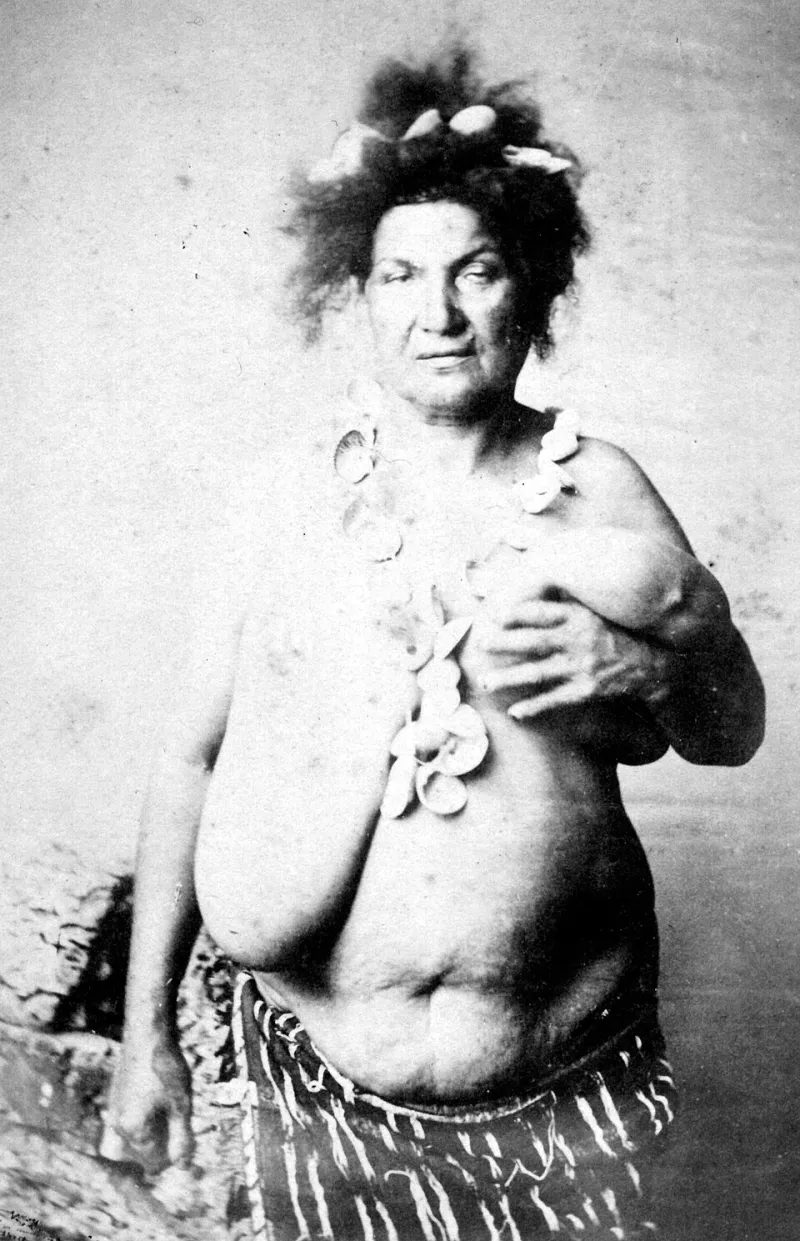
Photo: Photographer unknown - Probably 1870 -, Public domain, via Wikimedia Commons
There is a particular kind of erasure that happens slowly, almost imperceptibly. It does not announce itself with the demolition of a building or the closing of a school. It arrives in the silence that follows a grandmother's passing, in the untranslated letters tucked into a shoebox, in the dialect that a grandchild never quite learned to speak. Across America, communities who have long existed at the margins of the official historical record are refusing to let that silence win.
A growing network of grassroots oral history projects—many of them operating with modest budgets, volunteer labor, and borrowed recording equipment—is doing something that universities and national archives have largely failed to accomplish: capturing the living memory of underrepresented communities before it disappears entirely.
Memory as a Form of Resistance
The act of documenting one's own story carries political weight that is easy to underestimate. For communities whose histories have been distorted, minimized, or simply ignored by dominant cultural institutions, the decision to pick up a microphone and speak for the record is not a passive archival exercise. It is a declaration of existence.
In the South Side of Chicago, the Black Metropolis Research Consortium has spent years training community members to conduct interviews with elders who witnessed the Great Migration firsthand—a demographic shift that reshaped American cities and yet remains underrepresented in mainstream historical curricula. Participants describe the process as emotionally transformative, not only for the subjects being interviewed but for the young people conducting the interviews themselves. When a twenty-two-year-old sits across from a ninety-year-old and listens—really listens—something intergenerational is repaired.
This dynamic of repair is central to what oral history can accomplish. It is not merely about collecting data. It is about restoring the human texture of experiences that statistics and policy papers cannot hold.
Appalachia Speaks for Itself
In rural Appalachia, a region that has endured decades of economic decline and cultural caricature in equal measure, several community organizations have launched initiatives to document the region's complexity on its own terms. The Appalachian Citizens' Law Center and various local arts collectives have partnered with residents to record stories about coal country, labor organizing, food traditions, and the opioid crisis—not as tragedy porn for outside consumption, but as testimony from people who understand the full dimensions of their circumstances.
What emerges from these recordings is a portrait of Appalachia that defies the flattened narratives that have long circulated in national media: a place of fierce community bonds, sophisticated political analysis, and cultural richness that coexists with genuine hardship. When communities control the telling of their own stories, the story changes.
Indigenous Nations and the Urgency of Now
For Indigenous communities across the United States, the stakes of oral history preservation are existential in the most literal sense. Many Native languages are now spoken by only a handful of elders. When those elders pass, the languages—and the entire cosmological and cultural frameworks they encode—risk disappearing with them.
Tribes including the Myaamia Nation of Oklahoma and the Wampanoag Tribe of Gay Head (Aquinnah) in Massachusetts have developed language revitalization programs that rely heavily on recorded oral histories. These recordings serve dual purposes: they are linguistic archives that can inform teaching curricula, and they are cultural repositories that carry ceremonies, ecological knowledge, and spiritual traditions that written transcription alone cannot fully convey.
The urgency driving these projects is not abstract. It is the urgency of a phone call that has not yet been made, a recording session that has not yet been scheduled, a voice that is still present but will not always be.
Immigrant Communities Mapping Their Own Journeys
In cities with large immigrant populations—Los Angeles, New York, Houston, Minneapolis—oral history projects are creating archives that document the experiences of communities whose contributions to American life remain largely invisible in the dominant cultural narrative.
The StoryCorps initiative, one of the most well-known national oral history projects, has made deliberate efforts to reach immigrant communities through its MobileBooth and partnerships with local organizations. But it is often the smaller, hyperlocal projects that produce the most intimate and culturally specific archives. In the Somali diaspora communities of Minneapolis–Saint Paul, for instance, community-run organizations have developed recording projects in Somali, capturing not only immigration experiences but the preservation of oral poetry traditions—a form of cultural expression central to Somali identity that has no direct equivalent in Western archival frameworks.
These projects insist on documentation in native languages, refusing the assumption that translation into English is a prerequisite for a story's legitimacy or value.
Who Owns the Archive?
One of the most important—and most contested—questions in the oral history movement concerns ownership and access. Historically, academic institutions have extracted oral histories from communities, deposited them in university archives, and controlled access in ways that often served researchers more than the communities themselves.
A new generation of community archivists is pushing back against this model. Organizations like the Densho Project, which preserves the stories of Japanese Americans incarcerated during World War II, have built digital archives that prioritize community access and community governance. The principle is straightforward: the people whose stories are being told should have meaningful authority over how those stories are stored, shared, and used.
This shift in ownership philosophy reflects a broader cultural reckoning with the extractive dynamics that have long characterized the relationship between institutions and marginalized communities. An oral history project that deposits recordings in a distant archive and publishes academic papers is doing something fundamentally different from one that returns recordings to families, hosts community listening events, and trains local residents as ongoing stewards of the collection.
The Work Is Never Finished
What unites all of these projects—across geography, culture, and specific circumstance—is a shared recognition that the work of cultural preservation is also the work of cultural survival. Stories do not preserve themselves. Memory requires active tending.
For the communities engaged in this work, the act of recording is inseparable from the act of affirming that their experiences matter—that the texture of a life lived in a particular place, in a particular body, in a particular historical moment deserves to be held and honored. In a cultural landscape that often renders certain lives invisible, that affirmation is not a small thing.
It is, in fact, everything.