Governing from the Ground Up: The Neighborhood Assemblies Rewriting the Rules of Local Power
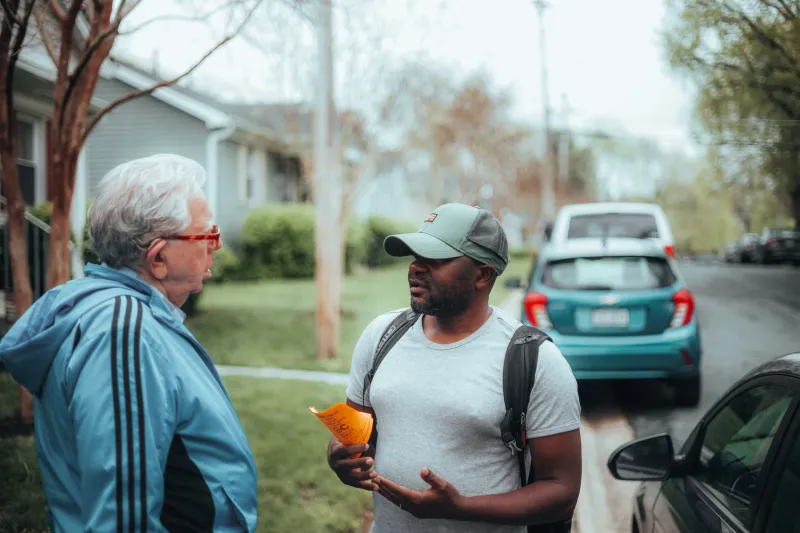
In a converted church basement in North Philadelphia, roughly forty residents gather on the second Tuesday of every month. There are folding chairs arranged in a circle, a hand-lettered agenda taped to a cinder-block wall, and a rotating facilitator who keeps a talking stick — a carved wooden dowel wrapped in blue yarn — moving steadily around the room. No mayor authorized this meeting. No city ordinance created it. And yet, over the past three years, this assembly has negotiated the installation of traffic-calming measures on a dangerous corridor, organized a community land trust that has preserved four affordable housing units, and mediated a prolonged dispute between a longtime homeowner and a newly arrived developer. They call themselves the Hartranft Neighborhood Council, and they are part of a quietly expanding movement to build democratic infrastructure from below.
Across the country, from the rust-belt blocks of Cleveland to the sun-baked streets of Tucson, residents are creating their own deliberative bodies outside — and sometimes in direct friction with — established city government. These assemblies go by many names: block councils, community forums, neighborhood congresses, people's tables. What they share is a foundational conviction that the decisions most consequential to daily life are being made too far away, too slowly, and with too little accountability to the people most affected.
The Failure That Created the Opening
The proliferation of hyperlocal governance experiments is not happening in a vacuum. It is, in many ways, a direct response to the chronic failures of municipal government to address concentrated poverty, infrastructural neglect, and the particular indignities of life in communities that have long been treated as afterthoughts by city hall.
"There's a street in our neighborhood that's been crumbling for eleven years," says Delores Whitman, a retired schoolteacher who helped found a neighborhood assembly in West Baltimore. "Eleven years of 311 calls, eleven years of council member promises, eleven years of nothing. At some point, you stop waiting for permission and you start solving the problem yourself."
What Whitman and her neighbors built is not a replacement for government — they are careful to say so — but a supplement to it, a structure capable of moving at the speed of community need rather than bureaucratic process. Their assembly operates on a modified consensus model, informed by the work of political theorist Jane Mansbridge and adapted through trial and error. Proposals require a supermajority to pass. Dissenting voices are formally recorded. Decisions are revisited if circumstances change.
This kind of procedural rigor is more common in these assemblies than outsiders might expect. Many groups have drawn on the traditions of the labor movement, the civil rights organizing tradition, and Indigenous governance models to construct decision-making frameworks that are simultaneously accessible and disciplined.
What Informal Power Can and Cannot Do
The results produced by these bodies are, in many cases, striking. In Albuquerque's South Valley, a neighborhood assembly has coordinated a community composting program that now serves more than two hundred households. In Detroit's Bagley neighborhood, a block council negotiated directly with a local credit union to establish a community emergency fund that has prevented at least a dozen evictions. In Louisville, a coalition of neighborhood assemblies successfully pressured the city to redirect a portion of its participatory budgeting allocation toward flood mitigation in historically underserved wards.
But the tensions are real, and they deserve honest examination. Neighborhood assemblies, precisely because they are informal, carry no legal authority. They cannot compel compliance. They cannot override zoning decisions or municipal contracts. And when they clash with official structures — as they increasingly do — the outcome is rarely clean.
"We passed a resolution opposing a warehouse development by a 38-to-2 margin," recounts Marcus Treviño, a community organizer in Houston's Fifth Ward. "The city council approved it anyway, three weeks later, without a single public comment period. Our resolution meant nothing legally. And that's a hard thing to explain to people who showed up, who participated in good faith, who thought their voice mattered."
That experience of democratic disappointment — of participation without power — is perhaps the central challenge facing the neighborhood assembly movement. It raises uncomfortable questions about the risk of informal governance becoming a pressure valve that absorbs civic energy without producing structural change.
Representation, Legitimacy, and the Question of Who Shows Up
There is a second tension, internal rather than external, that animates many of these assemblies: the question of who participates and whose interests get centered.
Neighborhood assemblies, like all voluntary democratic bodies, are vulnerable to capture by those with the most time, the most confidence, and the most fluency in the dominant cultural register. In practice, this often means that renters are underrepresented relative to homeowners, that recent immigrants participate less than longtime residents, and that the concerns of the most economically precarious — those with the least margin to attend a Tuesday night meeting — can fall to the margins.
The most thoughtful assemblies are grappling with this directly. Some have adopted paid facilitation to ensure linguistic and cultural accessibility. Others have created dedicated seats for renters, youth, and residents experiencing housing instability. A few have experimented with sortition — random selection of participants — to broaden representation beyond the self-selecting few.
"We realized about eighteen months in that our assembly was becoming a homeowners' association with better rhetoric," says Jasmine Okafor, a community organizer in Chicago's Woodlawn neighborhood. "We had to do serious work to restructure who was at the table and who was setting the agenda. That work is never finished."
A New Architecture of Democratic Life
Despite these challenges, the neighborhood assembly movement represents something genuinely significant: a grassroots insistence that democratic life cannot be reduced to the act of voting every two or four years, that governance must be woven into the texture of everyday community experience.
In this sense, these assemblies are not simply problem-solving mechanisms. They are, as the political philosopher Archon Fung has argued in a different context, schools of democracy — spaces where people learn, through practice, what it means to deliberate, to compromise, to be accountable to one another.
The Hartranft Neighborhood Council in Philadelphia is now training two additional blocks in North Philadelphia to establish their own assemblies, using a curriculum developed by residents themselves. The goal, says lead organizer Tariq Simmons, is not replication but proliferation — a network of autonomous bodies capable of coordinating when necessary and operating independently when not.
"We're not trying to become city hall," Simmons says. "We're trying to become something city hall was never designed to be: a place where the people who live here actually govern themselves."
That aspiration — modest in its immediate ambitions, radical in its long-term implications — is perhaps the most honest statement of what this movement is attempting to build: not a parallel government, but a deeper democracy, rooted in the block, the block, and the block after that.