Holding Loss Together: The Community-Led Grief Movements Transforming How Americans Mourn
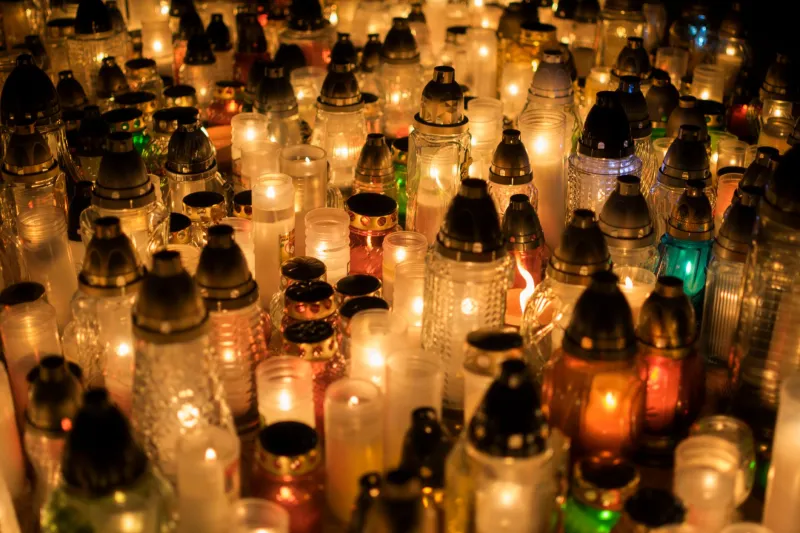
On a Saturday morning in late autumn, a dozen people gather in a public park in Portland, Oregon. They carry photographs, candles, and objects that belonged to people they have loved and lost. Some lost family members to COVID-19. Some are mourning friends taken by overdose. One woman holds a jar of soil from a wetland that was paved over to build a distribution center. A man in his fifties clutches a letter he never sent to his estranged father, who died before reconciliation was possible. The facilitator, a community grief worker named Simone Alcott, opens the circle with a simple instruction: "You don't have to explain your grief. You just have to bring it."
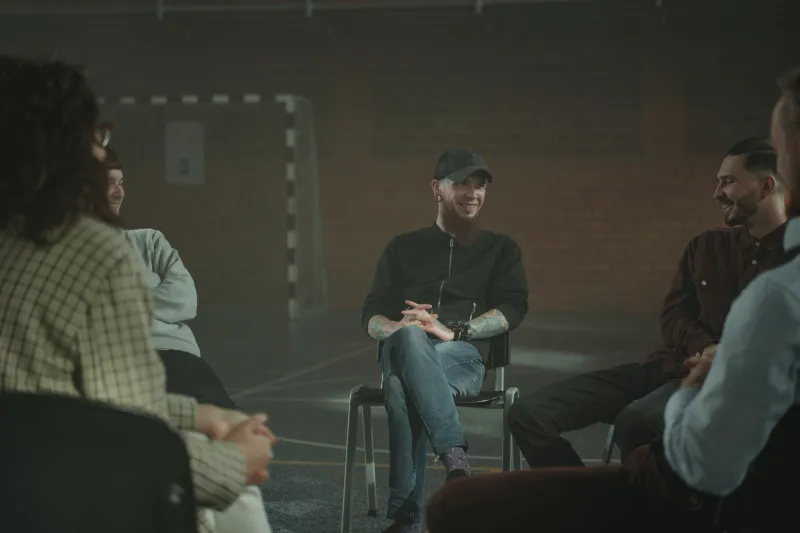
What unfolds over the next two hours is not therapy, not a church service, and not a conventional support group. It is something harder to categorize and, perhaps for that reason, something increasingly necessary: a communal ritual of mourning, designed by and for the community itself, operating entirely outside the institutional frameworks that American culture has traditionally assigned to the work of grief.
The Privatization of Grief
For much of the twentieth century, American culture managed death and loss through a combination of religious institutions, the funeral industry, and, increasingly, the mental health profession. Each of these frameworks offered genuine value. Each also carried limitations — financial, cultural, spiritual, and temporal — that left many Americans, particularly those from marginalized communities, without adequate support.
The funeral industry, with its average cost of nearly $8,000 per service, places dignified mourning beyond the reach of millions. Therapy, where it is accessible at all, operates in fifty-minute increments and tends to frame grief as an individual psychological event rather than a communal social one. Religious institutions, for those who have left them or never belonged, offer little. And the dominant cultural script — grieve privately, recover quickly, return to productivity — actively discourages the sustained, collective processing that grief, in its full dimensions, requires.
"We've medicalized and commodified death to the point where most people have no idea how to be with loss," says Dr. Camille Wynn, a grief researcher at the University of Washington. "And then we wonder why so many people are walking around with unprocessed grief that's leaking into everything — their health, their relationships, their civic life."
The community grief movement is, in part, a direct response to these structural failures. But it is also something more affirmative: an assertion that mourning is a communal practice, that loss is a shared condition, and that the rituals by which we honor what has been taken from us are too important to be delegated entirely to professionals and institutions.
Circles of the Bereaved
The organizational forms that community grief work takes are varied. Some groups are explicitly secular, drawing on death positive movement frameworks, the work of organizations like the Order of the Good Death, and the traditions of various Indigenous and non-Western cultures. Others are rooted in specific faith traditions but operate outside formal religious structures. Many exist somewhere in between — spiritual without being doctrinal, ritualistic without being prescriptive.
In Chicago's Pilsen neighborhood, a Latinx grief circle called Duelo en Comunidad has been meeting monthly for five years, creating space for community members to process losses that the dominant culture often renders invisible: deportations that sever families, deaths that occur in detention, the slow grief of watching a neighborhood's cultural character be displaced by gentrification.
"We grieve things that don't have funerals," says co-founder Esperanza Delgado. "The loss of language when your children stop speaking Spanish. The loss of a block when the families you grew up with are priced out. These are real losses, and they need to be held somewhere."
In rural Appalachia, where the opioid crisis has left few families untouched, community grief circles have emerged as a lifeline in areas with minimal mental health infrastructure. In McDowell County, West Virginia, a network of peer grief facilitators — many of them themselves bereaved — holds monthly gatherings in libraries, community centers, and church fellowship halls. Trained not as therapists but as compassionate witnesses, these facilitators offer something that professional services in the region cannot: proximity, cultural fluency, and the credibility of shared experience.
Grieving the Earth
Perhaps the most conceptually expansive frontier of the community grief movement is the growing practice of ecological or environmental mourning — the collective processing of losses wrought by climate change, habitat destruction, and species extinction.
So-called "grief for the Earth" circles have emerged in cities from Seattle to Miami, bringing together climate activists, scientists, artists, and ordinary citizens to mourn environmental losses that mainstream culture tends to either minimize or render abstract. These gatherings draw on the work of eco-philosophers like Joanna Macy, whose "Work That Reconnects" framework has influenced grief facilitation practices across the country.
"There's a particular kind of loneliness in grieving the natural world," says grief facilitator and environmental educator Marcus Bellefleur, who runs climate grief circles in New Orleans. "People feel it deeply, and then they feel ashamed of feeling it, like it's too big or too abstract to mourn. Our work is to say: no, this grief is real, it is legitimate, and it belongs in community."
Participants in these circles frequently describe a paradoxical experience: that the act of grieving ecological loss together, rather than deepening despair, often produces a renewed sense of connection and purpose. Shared mourning, it turns out, can be a foundation for shared action.
Grief as Social Transformation
This link between communal grief and civic renewal is perhaps the most striking — and most consequential — claim that the community grief movement is making. It is not a new idea. The civil rights movement, the AIDS activism of the 1980s and 1990s, and the mothers' movements that have emerged in response to police violence have all demonstrated how public mourning can become a catalyst for political mobilization.
What is new is the degree to which contemporary grief workers are making this connection explicit and intentional. In Oakland, a grief circle founded by families who lost loved ones to gun violence has become the organizational nucleus of a neighborhood safety initiative. In Atlanta, a community mourning practice that emerged during the pandemic has evolved into a mutual aid network that continues to serve hundreds of households.
"Grief is not the opposite of action," says Simone Alcott, the Portland grief worker. "Grief is what happens when you care enough about something to feel its loss. And people who feel things that deeply are the people who change things."
That conviction — that the willingness to mourn together is inseparable from the capacity to build together — animates the community grief movement at its most visionary. In a culture that has long equated strength with stoicism and productivity with worth, these circles are proposing something quietly radical: that the ability to sit with loss, to name it, to honor it in community, is not a weakness to be overcome but a form of wisdom to be cultivated.
And in that cultivation, something larger than individual healing is taking shape — a renewed understanding of what it means to belong to one another, across all the distances that grief, in its many forms, has opened between us.