Heard Into Wholeness: The Community Listening Circles Rebuilding Trust Across America
There is a particular kind of exhaustion that settles over a person who has spoken and not been heard. It is not the fatigue of effort but of erasure—the slow accumulation of moments in which one's voice entered a room and dissolved without consequence. Across the United States, in church basements and community centers, in rural fire stations and urban library meeting rooms, a growing number of organizations are confronting this exhaustion directly. They are doing so not by amplifying more voices, but by cultivating something far rarer: the capacity to genuinely receive them.
These are the listening circles—structured, intentional gatherings that place the act of hearing at the center of civic participation. Unlike town halls, which privilege the articulate and the organized, or social media platforms, which reward volume and speed, listening circles operate under a different logic entirely. Their premise is both simple and quietly radical: that communities cannot think clearly together until their members feel genuinely known by one another.
A Practice With Deep Roots
The philosophical foundations of intentional listening are neither new nor exclusively Western. Indigenous council traditions, Quaker meeting practices, and the African communal concept of ubuntu—the idea that one's personhood is constituted through relationship with others—all share the conviction that human understanding is fundamentally relational. What is new is the deliberate application of these principles to the specific fractures of contemporary American civic life.
Organizations such as the Appalachian Citizens' Law Center in Kentucky and various affiliate networks of the National Coalition for Dialogue and Deliberation have, over the past decade, begun documenting and refining listening-based community engagement models. What distinguishes these efforts from conventional dialogue programs is their explicit deprioritization of outcome. Participants are not gathered to reach consensus, draft resolutions, or produce action plans—at least not initially. They are gathered to hear and to be heard, with the understanding that genuine solidarity must precede effective strategy.
In eastern Kentucky, where decades of economic displacement have left many rural communities fragmented and mutually suspicious, facilitators trained in deep listening practices have reported something unexpected: when neighbors are given structured permission to speak without interruption or rebuttal, they frequently discover that their grievances, though differently articulated, share common sources. The act of listening, in these contexts, becomes a form of political education that no pamphlet could replicate.
What Listening Circles Actually Do
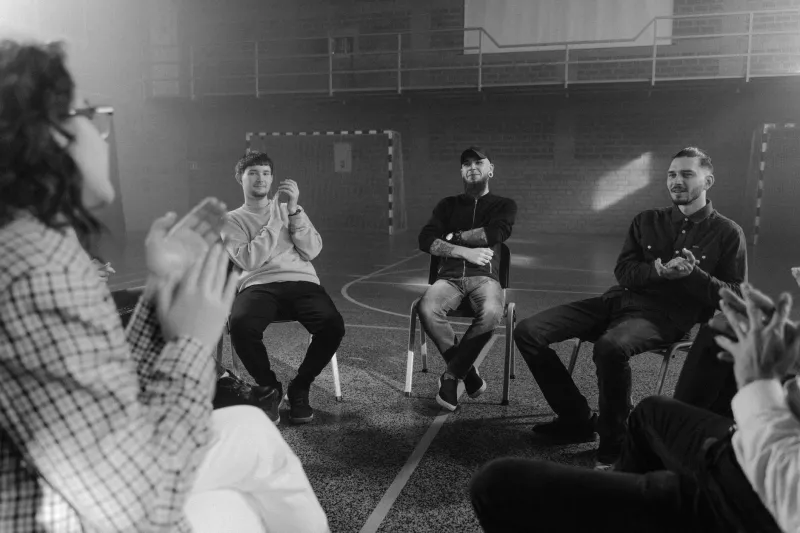
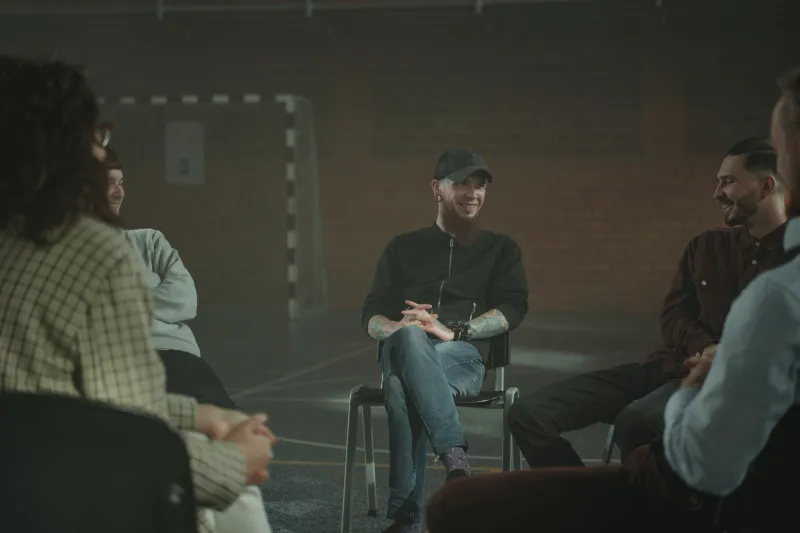
The mechanics of a listening circle vary by community and facilitator, but several elements recur with notable consistency. Participants typically sit in a circular arrangement—a spatial choice that is deliberate, signaling the absence of hierarchy. A talking object, a practice borrowed from Indigenous council traditions, is often passed among participants: only the person holding it may speak, and speaking is understood as a gift to the circle rather than a performance for an audience.
Facilitators are trained not to mediate conflict but to protect the conditions for authentic speech. This means enforcing silence from non-speakers, reflecting back what has been shared without interpretation, and resisting the impulse to move toward resolution before understanding has been achieved. The goal, as one longtime practitioner in Chicago's South Side described it, is to create "a container strong enough to hold what people are actually carrying."
What people carry, it turns out, is often heavier than public discourse allows. In listening circles convened among immigrant communities in the Rio Grande Valley, participants have spoken of grief that has no legal category—the mourning of landscapes, languages, and kinship networks severed by migration and policy. In predominantly Black neighborhoods in Baltimore and Detroit, residents have articulated forms of institutional distrust that survey data cannot adequately capture. In predominantly white rural communities in Ohio and West Virginia, people have named a longing for dignity and recognition that partisan politics has exploited but never genuinely addressed.
None of these disclosures would emerge in a standard public comment period. They require the particular safety that only sustained, structured listening can create.
From Hearing to Solidarity
Critics of the listening circle model sometimes argue that it is insufficiently action-oriented—that communities facing urgent material crises cannot afford the luxury of extended introspection. This critique, while understandable, misreads what listening circles actually produce over time.
In Minneapolis, a network of neighborhood listening projects that emerged in the aftermath of the 2020 civil unrest has been credited by local organizers with strengthening the relational infrastructure necessary for subsequent policy advocacy. Participants who had initially come as strangers—separated by race, class, and geography—developed, through repeated listening sessions, a degree of mutual comprehension that made coordinated action not only possible but durable. They did not agree on everything. But they had heard each other into a shared reality, and that shared reality became the ground on which coalition was built.
This is what proponents mean when they speak of listening as a form of civic participation. In a democratic culture that has largely reduced participation to voting, petitioning, or protesting, listening circles propose that the patient, disciplined act of receiving another person's experience is itself a contribution to the common good. It is, in this sense, a practice of citizenship—one that requires as much preparation, skill, and commitment as any form of public speaking.
The Discipline of Being Present
Facilitators who work in this space are candid about its challenges. Deep listening is not a natural posture in a culture that rewards quick response and visible productivity. Participants frequently arrive with the habit of formulating their reply before a speaker has finished, or of evaluating testimony against their own experience rather than receiving it on its own terms. Unlearning these habits requires practice, and practice requires institutional support that most communities have not historically provided.
Several nonprofit organizations are now working to change that. The Restorative Justice Project and various community-based affiliates of the PICO National Network have developed facilitator training programs that treat listening as a learnable civic skill—one that can be taught in schools, community centers, and faith communities. Their curricula draw on contemplative practices, restorative justice principles, and oral tradition to build what one program director called "a culture of presence" in communities accustomed to being spoken at rather than listened to.
The Civic Case for Silence
There is something quietly subversive about a movement that asks Americans to do less—to resist the impulse to respond, reframe, or resolve, and instead to remain present with what another person has offered. In a media environment that monetizes attention only insofar as it can be redirected toward engagement and reaction, the listening circle represents a form of communal life that cannot be easily commodified or algorithmically optimized.
That resistance to extraction may be part of its value. Communities that practice deep listening together are, in a meaningful sense, building something that belongs to them—a shared interior life, a collective memory of having been witnessed, a knowledge of one another that no platform can replicate or appropriate.
The listening posts being established across this country are not monuments. They leave no permanent structures, generate no viral content, and produce no immediately measurable outcomes. What they produce, instead, is the quiet and foundational thing that all durable civic life requires: the experience of mattering to someone who chose, deliberately and without obligation, to hear you whole.