Justice Without Judges: The Neighborhood Circles Healing Conflict From the Inside Out

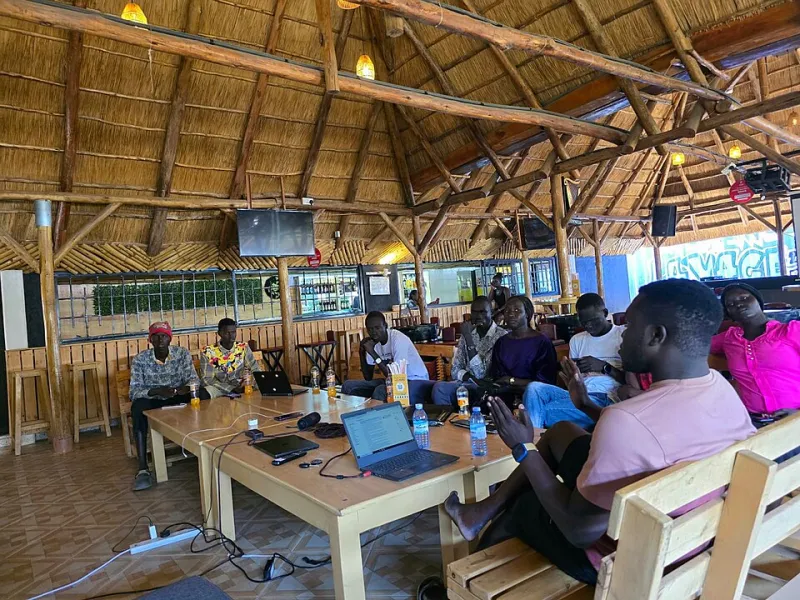
The conference room at a community center in North Minneapolis smells faintly of coffee and dry-erase markers. Folding chairs are arranged in a careful circle. On one side sits a fifty-two-year-old homeowner whose fence was damaged and whose relationship with a neighboring family has frayed over eighteen months of accumulated grievance. Across from her sits that family's adult son. Between them—not at the head of any table, because there is no head—sits a trained community facilitator, a retired schoolteacher who volunteers two evenings a week for something her organization calls a peace circle.
There are no lawyers present. No filing fees. No docket number. And yet, by the time the evening concludes, both parties have spoken at length, listened in enforced quiet, and arrived at a handwritten agreement that each signs willingly. More remarkably, they shake hands.
This is not an isolated scene. Across the United States, a growing network of community organizations, nonprofit coalitions, and neighborhood associations is developing what practitioners call community-based conflict resolution—informal but structured processes that allow residents to address harm, dispute, and grievance without entering the formal legal system. The movement draws on traditions ranging from Indigenous peacemaking practices to Quaker consensus circles to South African truth-and-reconciliation frameworks, adapting them for the particular textures of American neighborhood life.
Why the Courtroom Falls Short
The American legal system was not designed with community healing in mind. Civil courts are adversarial by architecture: one party wins, the other loses, and the underlying relationship—whatever it once was—is rarely restored. For many disputes that simmer in residential neighborhoods, the courtroom is also simply inaccessible. Attorney fees, court costs, and the sheer time demanded by formal proceedings place legal remedies out of reach for working-class and low-income residents, who are disproportionately the people most likely to experience unresolved neighborhood conflict.
Beyond access, there is the question of outcome. A court can compel a neighbor to trim an overgrown hedge or pay damages for a damaged vehicle. It cannot compel understanding. It cannot rebuild trust between a landlord and a long-term tenant, or between teenagers whose rivalry has escalated into something dangerous. Restorative and community-based approaches proceed from a fundamentally different premise: that conflict, when facilitated well, can be an occasion for mutual recognition rather than mutual defeat.
Building the Circle
Organizations engaged in this work vary considerably in their structures and philosophies, but most share certain foundational commitments. Participation is voluntary. Facilitators are trained community members, not credentialed legal professionals. The process centers on storytelling—each party is given uninterrupted time to describe their experience of the harm or dispute—before any negotiation of resolution begins.
In Oakland, California, the community organization Restorative Justice for Oakland Youth has extended these principles beyond neighborhood property disputes into schools and youth justice contexts, working with young people who have caused harm and those who have experienced it. Their model, now widely studied, demonstrates that when young people are asked to account for their actions within a community of people who know and care about them, outcomes in terms of recidivism and school re-engagement improve substantially compared with punitive suspension or juvenile court referral.
In Chicago's South Side, neighborhood-based mediation programs operated through community development organizations have addressed everything from noise complaints between apartment dwellers to more serious interpersonal conflicts that might otherwise have escalated into police involvement. Facilitators in these programs often reflect the demographics of the communities they serve—a deliberate choice rooted in the recognition that trust is not transferable across lines of race, class, and lived experience.
The Training Behind the Table
One of the most significant developments in this movement is the professionalization—though not the credentialization—of community facilitation. Dozens of nonprofits across the country now offer multi-week training programs that equip residents with skills in active listening, de-escalation, trauma-informed communication, and circle-keeping. These programs are often offered free of charge or on a sliding scale, with the explicit goal of placing conflict resolution capacity directly in the hands of communities rather than in the offices of specialists.
The distinction matters. When mediation is professionalized in the conventional sense—licensed, fee-based, institutionally housed—it tends to replicate the accessibility problems of the legal system it ostensibly supplements. Community facilitation, by contrast, treats the capacity for peacemaking as something inherent to neighborhoods, requiring cultivation rather than importation.
Facilitators trained in these programs are quick to emphasize what the work demands of them. "You have to be genuinely neutral in a way that's almost uncomfortable," says one volunteer mediator in Detroit who has facilitated more than sixty circles over four years. "You can't want one outcome over another. Your job is to hold the space so that whatever is true can be said, and whatever is possible can be found."
Tensions and Limitations
The movement is not without its critics or its complications. Civil liberties advocates raise legitimate concerns about processes that operate outside legal oversight, particularly when power imbalances between parties are significant—as they often are in landlord-tenant disputes or cases involving domestic conflict. Community circles are not appropriate for all situations, and responsible practitioners are explicit about the categories of harm—ongoing abuse, serious criminal conduct—where formal legal intervention remains not only appropriate but necessary.
There are also questions about enforceability. Agreements reached in community circles carry no legal weight unless parties choose to formalize them. For disputes where one party is acting in bad faith, the voluntary nature of the process can be a structural weakness. Practitioners acknowledge this openly, arguing that the majority of neighborhood conflicts do not involve bad faith so much as accumulated misunderstanding, unaddressed grievance, and the absence of any structured opportunity to speak and be heard.
Reimagining What Justice Can Be
What animates this movement, at its core, is a conviction that justice is not synonymous with legal process—and that communities possess both the wisdom and the relational infrastructure to address conflict in ways that courts, by their nature, cannot. This conviction is not naïve about the severity of harm that neighbors can cause one another. It is, rather, insistent that harm is best addressed not by removing conflict from community and placing it in institutional hands, but by creating conditions under which communities can confront it directly.
There is something quietly radical about a circle of neighbors, without legal authority or institutional sanction, choosing to sit with difficulty rather than litigate it. It is an assertion that the people most affected by a dispute are also the people most capable of resolving it—if given the tools, the time, and the facilitated space to try.
In a country whose legal system is strained, expensive, and frequently alienating, that assertion carries genuine weight. The backyard tribunal—informal, community-rooted, and oriented toward relationship rather than verdict—may represent not a workaround to justice, but a more honest approximation of it.