Voices Against the Record: How Grassroots Oral History Is Rewriting What Communities Know About Themselves
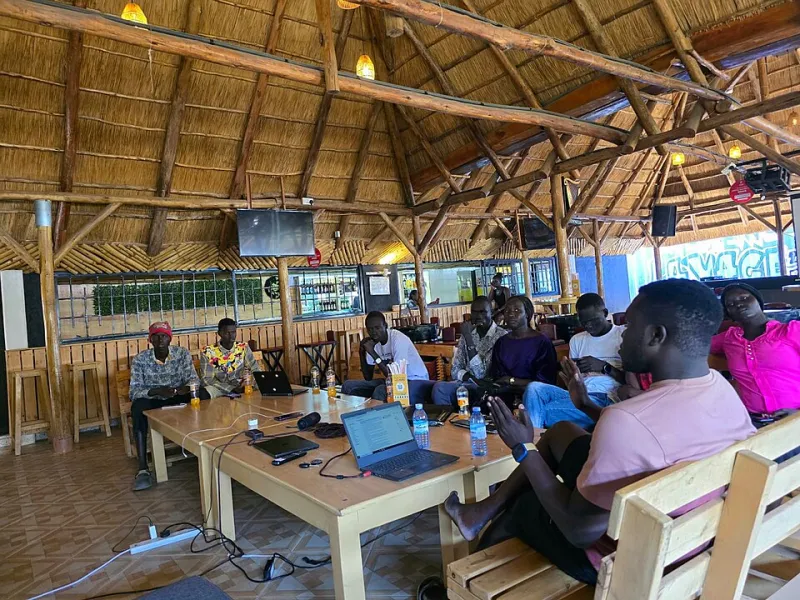
Photo: Lomoraronald, CC BY-SA 4.0, via Wikimedia Commons
For most of the twentieth century, the official story of an American neighborhood was told by those who held the deed to it—developers, city planners, elected officials, and the newspapers that covered them. The residents who had actually lived through urban renewal demolitions, industrial contamination, or discriminatory zoning were rarely asked. Their memories, when acknowledged at all, were treated as anecdote rather than evidence. That arrangement is now being systematically dismantled, one recorded conversation at a time.
Across the country, a loose but growing constellation of nonprofit organizations, community colleges, and neighborhood associations has taken up the practice of oral history not as an archival exercise, but as a form of civic intervention. The goal is not simply to store stories on a hard drive for future scholars. It is to put those stories to immediate, practical use—in courtrooms, in school curricula, at city council hearings, and on the walls of public buildings where the people who lived those stories still walk past every day.
When Memory Becomes Evidence
In Birmingham, Alabama, the nonprofit organization Reckon South has spent several years partnering with longtime residents of historically Black neighborhoods to document the lived consequences of mid-century highway construction—projects that, according to federal and municipal records, were described at the time as progress. The recorded accounts tell a different story: of churches divided by concrete, of family businesses shuttered by construction dust and detoured foot traffic, of communities that were never consulted and never compensated.
Those recordings have since traveled beyond the organization's servers. Excerpts have been presented to the Birmingham City Council as part of ongoing discussions about infrastructure reparations. Transcripts have been incorporated into lesson plans used by public school teachers in the district. And a selection of the interviews has been installed as a sound exhibition in a downtown library—accessible to anyone who walks through the door.
"We are not building an archive," said one of the project's lead organizers. "We are building a case."
This distinction matters enormously. Traditional oral history projects have often been critiqued for gathering testimony with great care and then consigning it to institutional repositories where it is rarely accessed by the communities that produced it. The newer generation of listening initiatives is deliberately structured to prevent that outcome. From the outset, community members are involved in determining how their recorded words will be used, who will have access to them, and what decisions those words are intended to influence.
Classrooms as Contested Territory
In the Pilsen neighborhood of Chicago, a predominantly Mexican American community that has faced significant displacement pressure over the past two decades, the organization Yollocalli Arts Reach has trained high school students to conduct oral history interviews with longtime residents. The resulting recordings are then woven into student-produced documentaries and zines that circulate through local schools—offering young people a version of their neighborhood's history that no state-approved textbook has ever contained.
The educational dimension of these projects is not incidental. It is central to their theory of change. When young people hear the voices of their own grandparents and neighbors describing the redlining practices that shaped their community, or the labor strikes that defined their grandparents' generation, or the political organizing that won their neighborhood its first community health clinic, something shifts in their relationship to civic life. History ceases to be something that happened elsewhere, to other people, and becomes something they are already inside of—something they have the standing to continue.
This is, in a meaningful sense, a form of political education. And the organizations facilitating it are clear-eyed about that fact. They are not simply documenting; they are equipping.
Sound as Public Architecture
Perhaps the most visually striking manifestation of this movement is the emergence of oral history as public installation. In Richmond, California, a city with a complex industrial history shaped by the presence of Chevron's massive refinery, the nonprofit Richmond Main Street Initiative collaborated with local artists and residents to create a series of audio listening stations installed throughout the downtown corridor. Passersby can stop, put on a pair of headphones, and hear a Richmond resident describe what the refinery fires of 2012 smelled like from their front porch, or what it felt like to attend a school where asthma rates were among the highest in the state.
These installations do not editorialize. They do not need to. The voices themselves carry the argument. And because they are embedded in public space—not in a museum, not behind a paywall, not in a library's special collections room—they reach people who would never seek out that information independently. A teenager waiting for the bus. A city employee on a lunch break. A developer scouting properties. All of them encounter the same testimony.
The spatial politics of this approach are intentional. Official narratives are inscribed in public space all the time—through statues, plaques, building names, and the selective silence of unmarked sites. Community oral history installations insert a counter-inscription into that same space, refusing to cede the built environment to a single authorized version of the past.
The Ethics of Listening
None of this work is without its complications. Questions of consent, representation, and power are not resolved simply by the fact that a project is community-based. Who decides which voices are recorded? Who controls the editing process? What happens when a community is not monolithic—when its members hold competing memories of the same events?
The most thoughtful organizations working in this space have developed careful protocols for navigating these tensions. Many have adopted models in which narrators retain ownership of their recordings and retain the right to withdraw or modify their testimony at any point. Others have established community advisory boards that include narrators themselves in decisions about how the material is used. These structures are not perfect, but they represent a serious attempt to ensure that the act of listening does not simply reproduce the extractive dynamics it claims to oppose.
A Different Kind of Power
What unites these projects across their considerable geographic and demographic diversity is a shared conviction: that the power to define a community's history is inseparable from the power to shape its future. When a neighborhood's story is told exclusively by outside institutions—government agencies, developers, journalists, textbook publishers—that neighborhood is perpetually positioned as an object of other people's decisions rather than an agent of its own.
Oral history, practiced with intentionality and rigor, interrupts that positioning. It insists that the people who have lived a history are its most legitimate interpreters. And it places their interpretation not in a vault, but in circulation—in schools, in public spaces, in policy debates, in the hands of young people who are still deciding what kind of city they want to live in.
The listening, in other words, is only the beginning. What follows is the harder and more important work: using what was heard to change what comes next.