Seeds That Carry Stories: How Neighborhood Gardens Are Becoming Living Archives of Cultural Memory
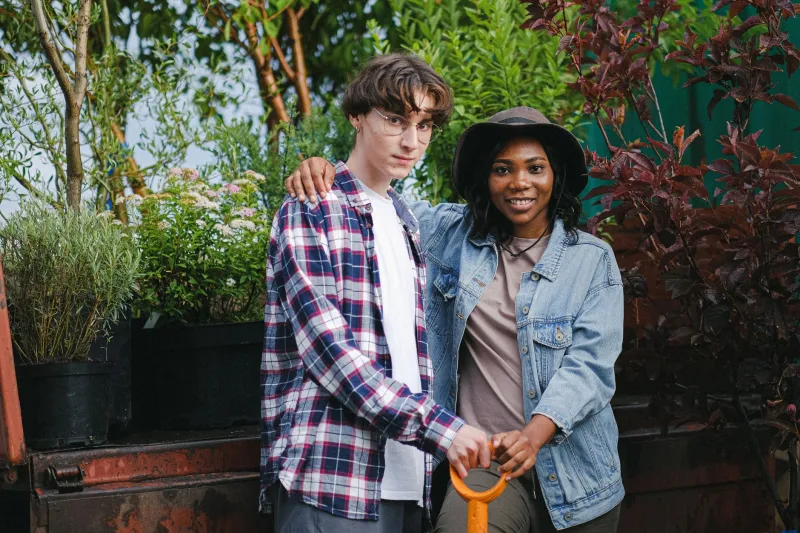
In a narrow community plot wedged between a laundromat and a bodega in Philadelphia's Kensington neighborhood, an elderly Puerto Rican woman named Doña Carmen Reyes tends a row of recao—the serrated-leaf herb that does not grow in most American grocery stores but has flavored sofrito in her family's kitchen for four generations. She did not plant it for aesthetics. She planted it because her grandmother once pressed dried sprigs between the pages of a letter sent from Ponce, and the scent of those leaves still lives somewhere in her memory. The recao, she explains to the teenager working alongside her, is not decoration. It is evidence.
Doña Carmen is one of hundreds of gardeners across the United States who are participating—some formally, some entirely by instinct—in what urban agriculture advocates and cultural preservation scholars are beginning to call the narrative garden movement. These are not gardens organized primarily around yield or beautification. They are gardens organized around story, memory, and the lived botanical knowledge that communities carry with them across borders, generations, and centuries of displacement.
More Than a Plot of Land
The concept of the narrative garden draws from a convergence of practices: the heirloom seed preservation movement, indigenous ethnobotany, community oral history projects, and the emerging field of social ecology. What distinguishes these gardens from conventional community plots is intentionality. Organizers work directly with residents—often elderly community members who hold the deepest wells of botanical knowledge—to identify plants that carry specific cultural, medicinal, or historical significance to the neighborhood's population.
At the Ujima Community Garden in Cleveland's Glenville neighborhood, a predominantly Black community organization has spent the last three years cataloguing what its members call "heritage plants"—species brought north during the Great Migration, cultivated in Southern kitchen gardens, and nearly lost when families moved into urban apartments with no soil access. Collard greens, sorghum, and several varieties of cowpea anchor the garden's central beds. Alongside each plant, hand-painted tiles bear not botanical names but family names, migration dates, and brief testimonies from the residents who donated seeds or cuttings.
"We kept calling it a garden, but what it really is, is a library," says Marcus Webb, the organization's program director. "Every plant has a provenance. Every seed has a story attached to it. When young people come here and ask why we grow this particular variety of okra, they're not just learning about horticulture—they're learning about their own families' histories."
The Seed as a Form of Testimony
For immigrant communities especially, the act of transporting seeds across international borders—often tucked into coat linings or folded into handkerchiefs, sometimes in defiance of customs regulations—represents one of the most intimate forms of cultural preservation imaginable. The seed is small enough to carry but substantial enough to sustain an entire culinary and medicinal tradition.
In Minneapolis, the Hmong American Farmers Association has long documented the practice of community members cultivating vegetables and herbs brought from Southeast Asia, many of which have no commercial equivalent in American markets. What has shifted more recently is the deliberate effort to pair these plants with recorded testimony—video interviews, written narratives, and oral histories that explain not merely what a plant is used for, but what it means. A particular bitter melon variety, for instance, might carry with it the memory of a grandmother's remedy, a refugee camp meal, or a festival preparation that no longer has a venue in which to be performed.
The Hmong Village Farmers Market, which operates seasonally in St. Paul, has begun hosting "plant story" sessions where vendors narrate the cultural significance of what they grow. These sessions draw multigenerational audiences and have become, organizers say, some of the most emotionally resonant community gatherings they have facilitated.
Indigenous Knowledge at the Center
Any honest examination of narrative gardens in the United States must contend with the fact that Indigenous communities have never stopped practicing this form of botanical memory-keeping. The Three Sisters—corn, beans, and squash—represent perhaps the most widely known example of plants whose cultivation encodes an entire cosmology, a set of ecological relationships, and a philosophy of interdependence that stretches back thousands of years.
Organizations like the Indigenous Seed Keepers Network and the Mvskoke Food Sovereignty Initiative have spent years working to restore access to native plant varieties that were suppressed or lost during periods of forced assimilation, agricultural industrialization, and land dispossession. For these communities, the narrative garden is not a new concept—it is a reclamation of something that was always theirs.
"Our seeds are our relatives," says one seed keeper affiliated with a tribal nation in the Great Lakes region who asked to be identified only by her traditional name. "When we plant them, we are not just feeding ourselves. We are continuing a conversation that has been going on for a very long time. The garden talks back because we listen to it."
It is from this Indigenous understanding that the broader narrative garden movement draws some of its most important philosophical grounding—the idea that cultivation is not a passive act of production but an active practice of relationship and reciprocity.
When Generations Meet Over Soil
One of the most consistently reported outcomes of narrative garden programs is their capacity to bridge generational divides in ways that more conventional community programming often struggles to achieve. There is something about shared physical labor—the digging, the watering, the patient waiting—that creates conditions for conversation that a meeting room or a classroom rarely replicates.
In Los Angeles, the Koreatown Youth and Community Center has integrated a narrative garden component into its after-school programming, pairing Korean American teenagers with first-generation elders who bring seed varieties and cultivation knowledge from provinces across the Korean peninsula. The teenagers, many of whom have grown up with limited access to their heritage language, report that working alongside elders in the garden has opened lines of communication that felt previously closed.
"I didn't know my grandmother grew up farming," one participant told a program coordinator. "She never talked about it. But when we were planting perilla together, she started talking, and she didn't stop for two hours."
This is the quiet power of the narrative garden: it provides not just a setting for intergenerational exchange but a catalyst for it. The plant becomes a shared object of attention, a neutral ground on which different generations can meet without the weight of expectation or the friction of direct confrontation.
Cultivating the Future
As housing pressures, climate change, and the continued consolidation of industrial agriculture threaten both urban green space and seed biodiversity, the stakes of this work grow more urgent. Community organizations engaged in narrative gardening are increasingly aware that they are operating against a clock—that elders who carry irreplaceable botanical knowledge are aging, that heirloom varieties face extinction, and that the urban land on which these gardens grow is perpetually vulnerable to development.
Advocates are pushing for policy responses: protections for community garden land tenure, funding for seed library infrastructure, and the formal integration of ethnobotanical knowledge into school curricula. Several cities, including Detroit, Portland, and Albuquerque, have taken preliminary steps toward recognizing community gardens as cultural heritage sites—a designation that would offer meaningful protections and resources.
But at their core, narrative gardens remain what they have always been: acts of community will. Neighbors deciding together that what their grandparents knew matters, that the plants their families carried across oceans and state lines deserve soil and sunlight, and that the stories embedded in those plants deserve to be heard.
Doña Carmen finishes her row of recao and straightens slowly, pressing her palms into the small of her back. The teenager beside her writes something in a notebook—the name of the herb, a phonetic spelling, a note about what it tastes like and what it is for. The garden, as it always does, has been talking. Someone, at last, is writing it down.