The Table as Infrastructure: Inside America's Exploding Supper Club Movement
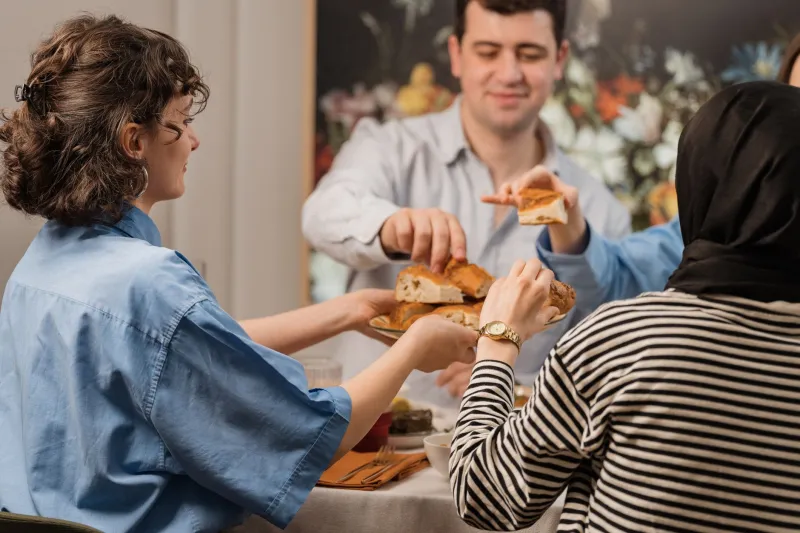
Every second Thursday in a church basement in Rochester, Minnesota, something subversive happens. Strangers cook for strangers. A retired Lutheran pastor ladles out jollof rice beside a Somali grandmother; a nursing student who came alone three months ago now runs the beverage table like she was born to it. Nobody charges admission. Nobody sponsors anything. The only requirement is a dish — and even that, organizers will quietly waive.
Scenes like this are multiplying across the country, and they deserve to be taken seriously not merely as heartwarming anecdotes but as infrastructure. Because that is, functionally, what they are.
Five Nights a Month, Zero Dollars of Budget
The community supper club takes many forms. In Phoenix and Tucson, interfaith groups host monthly dinners specifically designed for isolated older adults, many of whom live alone and, research suggests, eat the majority of their meals in silence. In the Twin Cities, rotating potlucks move between a mosque, a synagogue, and a Methodist hall, deliberately making guests slightly uncomfortable in the best way — new room, new rituals, same table. In Rust Belt towns and California suburbs alike, young professionals are reviving the supper club as an antidote to the atomized treadmill of work and streaming.
What unites them is a radical simplicity: food made by hand, shared with people who are not yet friends, in a space that belongs to no one and everyone. The budgets are absurdly small. The returns are not.
Why the Table Outperforms the Town Hall
Advocates for civic renewal have long obsessed over formal mechanisms — forums, hearings, town squares. But the supper club operates on a different and arguably deeper level. Sharing food is among the oldest trust-building behaviors humans possess. Neuroscientists note that eating together lowers social defenses in ways no agenda-driven meeting can. A person who has broken bread with a stranger is measurably more likely to see that stranger as a neighbor rather than an abstraction — which is, historically, the precondition for every meaningful act of civic solidarity.
Ask the organizers and they will tell you what happens next, the part that never makes the brochure. The dinner group notices an elder's house needs repairs and shows up with ladders. The interfaith potluck becomes a rapid-response network when a family faces eviction. The Thursday supper becomes a phone tree, then a rideshare rotation, then a bereavement committee. The meal is the doorway; the community is what walks through it.
The Loneliness Emergency No Legislation Has Solved
The timing of this movement is not accidental. Public health officials have warned for years that loneliness constitutes a health risk on par with smoking, and that millions of Americans — especially elders, young men, and recent arrivals — report no regular social contact at all. Policy responses have been slow and, frankly, awkward. You cannot legislate a friend.
But you can set a table. The supper club succeeds precisely where formal programs struggle because it asks something of participants. Everyone brings something, even if it's only a folding chair or a willingness to wash dishes. This mutuality is the quiet genius of the model: it transforms recipients into hosts, and hosts into stewards. Dignity is preserved because no one is being served — everyone is serving.
How to Start One (According to the People Who Have)
The organizers who have sustained these tables for years offer advice that is refreshingly unglamorous. Keep the commitment small and fixed — a recurring night beats an ambitious schedule that collapses. Choose a free, familiar space: a church basement, a library meeting room, a community center. Never let the food become a barrier; the potluck rule is bring what you can, and what you can is always enough. And above all, design for the newcomer. A table that only fills with existing friends is a party, not a supper club.
A Modest Proposal, Served Warm
There is a temptation to dismiss shared meals as too soft, too small, too grandma-coded to constitute serious civic strategy. The evidence suggests the opposite. In an era of institutional distrust and epidemic isolation, the humble supper club may be the most scalable civic technology available — requiring no funding streams, no legislation, and no permission beyond a kitchen and a night of the week.
Five nights a month will not fix a fractured nation. But they will hold a neighborhood together, which has always been where fixing begins. Pull up a chair. Bring a dish. The table, as it turns out, was never just furniture.