The People's Newsroom: How Grassroots Journalists Are Reclaiming the Right to Tell Their Own Stories
In the summer of 2021, a chemical spill at an industrial facility on the eastern edge of Richmond, Virginia, went unreported by every major regional outlet for eleven days. During those eleven days, residents of the surrounding neighborhood—predominantly Black and working-class—experienced headaches, nausea, and a persistent chemical odor that they reported to city officials without response. It was a volunteer reporter for a neighborhood news collective called the Richmond Dispatch Cooperative who finally broke the story, having been tipped off by a resident who knew, from experience, that the mainstream press would not come.
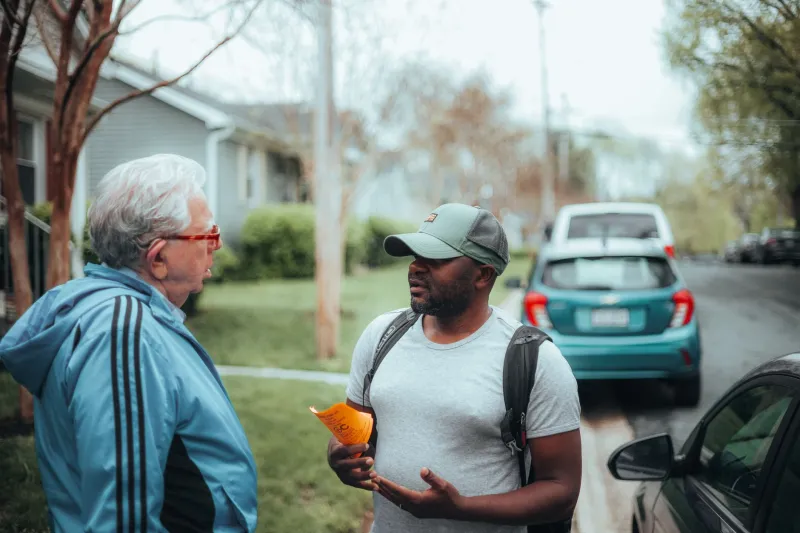
"We knew because we live here," says Darnell Watkins, one of the cooperative's founding members. "That's not a small thing. That's the whole thing."
The Richmond Dispatch Cooperative is one of hundreds of community-run news operations that have emerged across the United States over the past decade, filling a void left by the collapse of local journalism and the systemic inattention of metropolitan media to neighborhoods that do not conform to the demographics advertisers prize. These outlets vary enormously in form and capacity—some are weekly newsletters distributed via email, others are podcast networks, still others are print zines produced on donated equipment in church basements—but they share a foundational conviction: that the power to name, document, and narrate community life is not a professional privilege. It is a democratic right.
The Collapse That Created the Opening
The erosion of local journalism in America is well-documented and devastating in its scope. Between 2005 and 2023, the country lost more than one-third of its local newspapers. Hundreds of communities have become what researchers term "news deserts"—places with no meaningful local coverage whatsoever. The consequences are not merely informational. Studies have shown that communities without local journalism experience lower voter turnout, reduced civic participation, and diminished accountability for local government and institutions.
But the collapse of institutional local media has also created an opening. Into the vacuum have stepped community organizations, advocacy groups, and ordinary residents who recognized that their neighborhoods' stories were not going to tell themselves—and that waiting for a major outlet to notice was no longer a viable strategy.
"The mainstream press has always had a relationship with certain communities that was extractive," says Dr. Kezia Morales, a media studies scholar at the University of New Mexico who studies community journalism. "They came in for the crime story, the disaster, the conflict. They left without context, without history, without the texture of ordinary life. Community news outlets are built on a completely different premise: that everyday life is inherently newsworthy, and that the people living it are the most qualified to report it."
Newsrooms Without Walls
The organizational structures of these community outlets are as varied as the communities they serve. In Chicago's Pilsen neighborhood, a collective of bilingual journalists produces a weekly digital publication covering immigration policy, housing displacement, and local arts—all through a lens explicitly shaped by the experiences of the neighborhood's Mexican American residents. The outlet, which operates as a nonprofit with a community board, has broken stories about predatory landlords and municipal permitting irregularities that directly affected its readership.
In rural Appalachian Kentucky, a network of part-time citizen reporters coordinates through a shared messaging platform, filing stories from their respective hollows and townships to a central editor who compiles them into a monthly print newsletter distributed at feed stores, laundromats, and community health clinics. The network covers local school board decisions, water quality issues, and the slow-motion economic transformation of a region that national media tends to visit only in election years.
In Minneapolis, a Black-led multimedia collective has built a following of tens of thousands across its podcast, newsletter, and social media channels, focusing on police accountability, education equity, and the cultural life of the city's North Side. The collective employs a small paid staff supplemented by a rotating cohort of community correspondents—residents who receive basic journalism training in exchange for regular contributions.
What unites these disparate operations is not ideology but orientation: they are built from the community outward, rather than from an editorial office inward.
Training the Witnesses
One of the most significant developments in the community journalism movement is the proliferation of training programs that equip residents with the skills to document their own neighborhoods. Organizations such as City Bureau in Chicago, the Resolve Philadelphia network, and the Rural News Network have developed accessible curricula covering basic reporting, audio production, data literacy, and the legal rights of citizen journalists.
These programs are deliberately designed to lower the barriers to entry—not by sacrificing rigor, but by recognizing that the most important qualification for covering a community is belonging to it. "We don't teach people to be journalists in the abstract," says Marcus Webb, a program coordinator at a community media organization in Detroit. "We teach people to be witnesses to their own lives, and to share what they witness in ways that others can act on."
The results have been consequential. Citizen reporters trained through these programs have documented environmental violations, exposed discriminatory practices in public housing allocation, and produced the first sustained coverage of local school board elections in communities that had not seen a reporter at such meetings in years.
Accountability From the Inside
Perhaps the most politically significant dimension of community journalism is its capacity for local accountability—the kind that major outlets, operating from a distance and under commercial pressures, are structurally ill-suited to provide.
When a city council in a mid-sized Midwestern city voted to rezone a low-income neighborhood for industrial development without adequate public notice, it was a neighborhood newsletter—run by two residents on a shoestring budget—that first reported the decision in plain language accessible to the people most affected. The coverage catalyzed a community response that ultimately forced a public hearing and a partial reversal of the plan.
"The city was counting on people not knowing," says one of the newsletter's editors, who asked to be identified only by her first name, Rosa. "That's how a lot of local governance works. You move fast, you use technical language, you hold the meeting at 2 p.m. on a Tuesday. Community journalism is what makes that strategy fail."
Narrative as Sovereignty
Beyond accountability, community journalism serves a function that is harder to quantify but no less vital: it gives communities the power to narrate themselves. This is not a trivial matter. The stories a community tells about itself—the events it considers worthy of record, the people it centers, the language it uses to describe its own struggles and aspirations—shape collective identity in profound ways.
For communities that have historically been defined by others—by crime statistics, by deficit narratives, by the gaze of outsiders who arrived with conclusions already formed—the act of producing one's own journalism is an assertion of dignity and self-determination.
"Every story we publish is an argument," says Darnell Watkins of the Richmond Dispatch Cooperative. "An argument that this neighborhood exists, that the people in it matter, that what happens here is worth knowing about. We're not just filling a coverage gap. We're making a claim."
That claim is, at its core, a democratic one. And in the landscape of American civic life, where the mechanisms of formal democracy have so often failed the communities that need them most, the grassroots newsroom stands as one of the more durable forms of resistance available: patient, persistent, and stubbornly committed to the idea that truth, documented and shared, remains a form of power.