Where the Mirror Holds More Than a Reflection: The Barbershop and Salon as America's Unofficial Civic Square
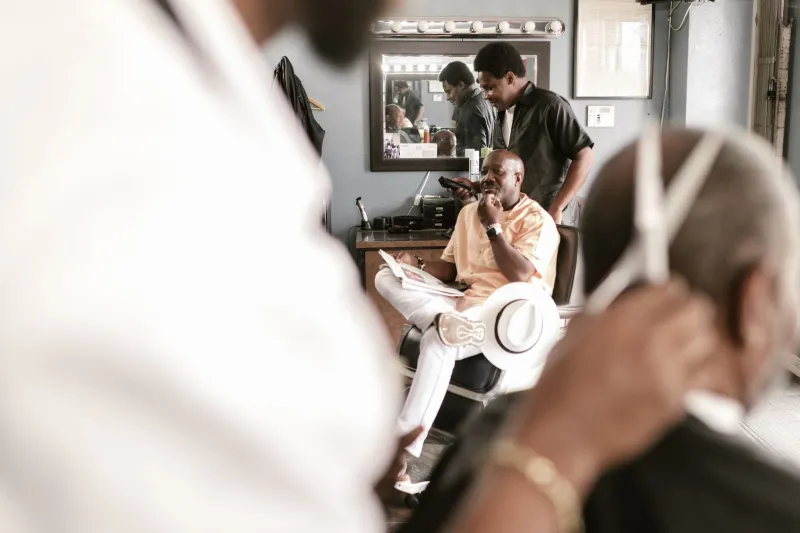
There is a moment, familiar to millions of Americans, when the conversation in the barber's chair turns from sports to something heavier. A rent notice. A hospital bill. A school board decision that will reshape a child's future. The stylist keeps clipping, keeps listening, and the client keeps talking — because in this chair, for this hour, someone is actually paying attention.
It is precisely this intimacy that has made barbershops and beauty salons the most reliable civic infrastructure in the United States, even as formal institutions struggle to earn a fraction of that trust.
The Architecture of Trust
Researchers who study civic engagement have a term for places like these: third spaces — locations that are neither home nor work, where people gather on their own terms. But the barbershop occupies a rarer category still. In Black, Latino, and immigrant communities, these businesses have survived redlining, economic disinvestment, and the hollowing out of main streets. Their longevity is itself a credential.
"People don't come to me for a haircut," says a shop owner in Detroit's Fitzgerald neighborhood who now hosts monthly voter registration drives. "They come because I've known their father. Because my door's been open twenty-two years. When I tell them their vote matters, they believe me in a way they don't believe a mailing."
That credibility cannot be manufactured or contracted out. It compounds over decades, one conversation at a time.
From Clippers to Civic Infrastructure
The transformation underway is neither formal nor uniform, but its patterns are unmistakable. In Atlanta, salons partner with public health nurses to offer blood pressure checks between appointments — a response to the city's stark racial gaps in hypertension outcomes. In Fresno, barbers hand out translation guides and naturalization resources to clients navigating citizenship paperwork. In Philadelphia, a network of shops doubles as cold-weather outposts, connecting unhoused neighbors to shelters and warming centers.
National efforts have taken notice. Organizations like the Black Barbershop Health Outreach Program have screened tens of thousands of men in exactly these settings, reaching populations that primary care systems routinely miss. Voter engagement groups increasingly treat the shop as the first stop, not the last resort.
What organizers are learning is a lesson in humility: the institution does not deliver the community to the cause. The cause must earn its way into the community — through the people and places that already hold it together.
Why Institutions Keep Failing Where the Shop Succeeds
The contrast is instructive. A government agency communicates through notices; a barber communicates through relationship. A nonprofit measures engagement in clicks; a stylist measures it in return visits spanning generations. Where official outreach often arrives with the subtle condescension of a form letter, the shop's civic talk arrives embedded in genuine care.
There is also the matter of who owns the space. These are small businesses rooted in the neighborhood, staffed by people who live with the consequences of every policy decision discussed across their chairs. Accountability is not an abstraction here. It is a neighbor.
Protecting the Commons
Advocates caution that this informal network deserves protection, not exploitation. Some worry that commercial voter-mobilization drives or political operatives could colonize spaces whose power derives from their independence. The most successful partnerships are those where shop owners set the terms and organizers follow the community's lead.
The deeper lesson for American civic life is uncomfortable for the powerful: trust was never a technology problem or a messaging problem. It was always a proximity problem. And in thousands of shops and salons across the country, proximity has been there all along — humming under the clippers, waiting for institutions humble enough to listen.