Ground Rules at the Dinner Table: How American Families Are Borrowing From Democracy to Heal Themselves
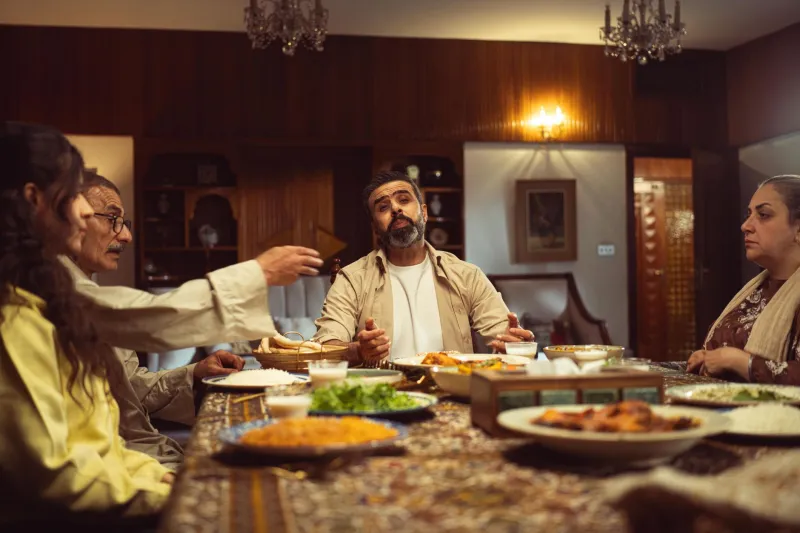
For three years running, the Okonkwo family of Columbus, Ohio, observed a ritual that most households would consider unusual. Before Thanksgiving dinner was served, before the turkey was carved or the sweet potato casserole passed around, the family's eldest daughter—a community organizer by profession—distributed a single laminated card to each person at the table. On it were printed five agreements: speak only from personal experience, ask questions before making judgments, allow silence, assume good faith, and commit to understanding rather than persuading.
These were not rules invented for family harmony alone. They were adapted directly from the deliberative dialogue protocols used in civic engagement workshops across the country. And in the Okonkwo household, they had become as essential to the holiday as the food itself.
"The first time we tried it, my uncle nearly walked out," recalls Adaeze Okonkwo, 34. "He thought it was ridiculous—like we were treating Thanksgiving like a city council meeting. But by the end of the night, he had said things to my grandmother he'd never said in forty years. And she had heard them."
When the Civic Enters the Domestic
The practice of borrowing deliberative frameworks from public life and applying them to private family dynamics is not yet widespread, but it is growing with quiet momentum. Facilitated by a loose network of family therapists, community organizers, and nonprofit educators, structured family dialogue is emerging as a response to what many Americans describe as an unbearable tension at the intersection of political polarization and intimate kinship.
Organizations such as Essential Partners, formerly known as the Public Conversations Project, have long offered facilitation tools designed for communities navigating deep ideological conflict. What is newer—and striking—is the degree to which families themselves are adapting these tools without institutional prompting, driven by the recognition that the dinner table has become one of the most contested civic spaces in American life.
The frameworks vary in their particulars but share a common architecture. Participants agree in advance to a set of process norms. A facilitator—often a family member trained in conflict mediation, or simply the person most trusted to hold the room—guides the conversation. Questions are posed in open-ended form, designed not to resolve disagreement but to illuminate the values and experiences that underlie it. And crucially, the goal is not consensus. It is comprehension.
The Architecture of Understanding
In Minneapolis, a multigenerational Somali American family has developed what they call their "circle conversations"—monthly gatherings modeled loosely on restorative circle practices used in local schools. The family patriarch, a retired schoolteacher who immigrated in the 1990s, initially resisted the format. "In our culture, elders speak and younger people listen," he explains through a family interpreter. "This felt like it reversed everything."
But his daughter, a social worker who facilitates restorative circles professionally, made a careful argument: the format did not diminish elder authority. It created conditions under which younger family members could actually hear elders, rather than simply wait for them to finish speaking. "There's a difference between being obeyed and being understood," she says. "I wanted my father to be understood."
Over time, the circle conversations became a space in which the family navigated genuinely difficult terrain: disagreements about religion, about gender roles, about what it means to be Somali and American simultaneously. Not every conversation ended in resolution. Some ended in tears, or in a long, uncomfortable silence that was itself a form of communication. But the family kept returning.
"We have a phrase in Somali," the patriarch says. "It means, roughly, 'the word that is spoken cannot be unspoken, but it can be answered.' That is what we are doing. We are answering each other."
Facilitators in the Family
The role of the family facilitator deserves particular attention. In households that have adopted structured dialogue, the facilitator occupies a position of unusual delicacy: trusted enough to hold authority, humble enough not to abuse it. Many are adult children who have received training through nonprofit organizations, community colleges, or civic engagement programs. Others are self-taught, having assembled their practice from books, podcasts, and the accumulated experience of many failed conversations.
What they share is a commitment to process over outcome—a disposition that runs counter to the cultural expectation that family conversations about hard subjects are supposed to end with someone winning, or at least with a consensus that papers over the fracture. The facilitator's job is not to produce agreement. It is to keep the conversation alive long enough for something genuine to pass between people.
"Most families fight because they're actually trying to connect," observes Dr. Miriam Castellanos, a family systems therapist based in San Antonio who has incorporated deliberative dialogue training into her practice. "The content of the argument is almost never the real thing. The real thing is: do you see me? Do I matter to you? Structured conversation slows things down enough that people can actually answer that question."
Cultural Continuity as a Democratic Act
There is a dimension to this movement that extends beyond individual family health. In communities where cultural transmission across generations has been disrupted—by immigration, by systemic displacement, by the pace of social change—structured family dialogue is also a vehicle for preserving what might otherwise be lost.
For the Nguyen family of Garden Grove, California, the monthly structured conversations that began as an attempt to navigate political disagreements between American-born children and Vietnamese-born parents have evolved into something closer to an oral archive. "We started talking about our different views on voting," says Lily Nguyen, 29. "And somehow we ended up with my grandfather talking for two hours about leaving Saigon. We had never heard that story. Not the whole thing."
The deliberative format—with its emphasis on open questions and unhurried listening—had created conditions for a kind of intergenerational testimony that ordinary family life rarely accommodates. The family now records these sessions with the grandfather's permission, building what Lily describes as "a record of who we are and where we came from."
This is, in the deepest sense, a civic act. Communities that can articulate their own histories, that can hold disagreement without dissolution, that can practice the disciplines of democratic life within the most intimate of institutions—these are communities that carry democratic culture forward. The dinner table, it turns out, may be one of the most important civic spaces we have. We have simply not always treated it as such.
The Practice Continues
None of this is easy. Structured dialogue requires a willingness to be uncomfortable, to sit with unresolved tension, to resist the impulse to persuade. It asks something genuinely difficult of people who love each other: that they treat love not as a reason to avoid hard truths, but as the very foundation that makes hard truths survivable.
The Okonkwo family still distributes the laminated cards at Thanksgiving. The uncle who nearly walked out three years ago now helps facilitate the conversation. He has, by his own account, changed some of his views—not because he was argued out of them, but because he was heard into a position where changing felt possible.
"Democracy doesn't start in Washington," Adaeze Okonkwo says. "It starts in the room where people who disagree still have to eat together. That's where you learn whether you actually believe in it."