Before the Solution Comes the Word: How Communities Are Seizing the Right to Name Their Own Struggles

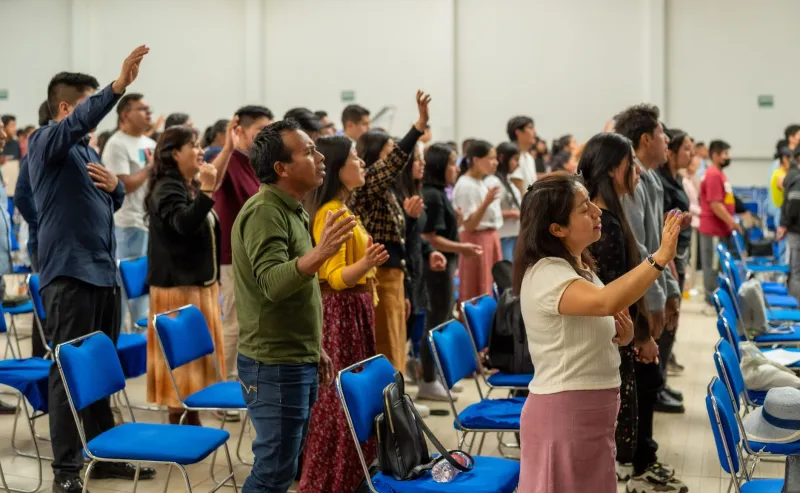
In the fall of 2019, a coalition of residents in a low-income neighborhood on Chicago's South Side gathered for what organizers called a "naming circle." There were no outside consultants in the room, no grant officers with clipboards, no public health officials armed with slide decks. There was only the community itself—neighbors, elders, young parents, and longtime block association members—seated together with a single shared task: to describe, in their own words, what was wrong.
What emerged from that gathering was not a list that matched any existing funding category or policy framework. Residents did not speak of "food deserts" or "health disparities" or "structural unemployment." They spoke instead of abandonment, of the specific texture of being ignored by systems that nonetheless claimed authority over their lives. They named the problem not as a deficit within their community but as a relationship—one characterized by extraction, disregard, and the persistent substitution of outside judgment for local knowledge.
That distinction, organizers would later reflect, changed everything.
The Politics Embedded in a Label
Language is never neutral, and nowhere is this more consequential than in the framing of social problems. When an external institution—a city health department, a foundation, a federal agency—identifies and names a community's challenges, it simultaneously determines the range of acceptable solutions. A neighborhood labeled a "food desert" becomes the target of grocery store incentives. A population described as suffering from "financial illiteracy" receives workshops. The diagnosis shapes the prescription, and in doing so, it also shapes who holds the authority to heal.
For decades, progressive scholars and community organizers have argued that this dynamic is itself a mechanism of disempowerment. When communities are rendered as objects of study rather than subjects of their own experience, they are effectively stripped of the interpretive authority that belongs to anyone who has actually lived through something. The named become passive recipients of solutions designed elsewhere, by people who may understand the statistics but have never felt the particular weight of the conditions those statistics describe.
Grassroots organizations across the country are now mounting a deliberate, sophisticated challenge to this arrangement. They are insisting that the act of naming—of collectively identifying what is broken and why—must belong to the people most affected, and that this insistence is not simply a matter of dignity. It is a matter of accuracy.
Circles, Assemblies, and the Architecture of Collective Naming
The structures communities have developed for this work vary considerably, but they share a common architecture: they are participatory, iterative, and deliberately resistant to the pressure of pre-existing frameworks.
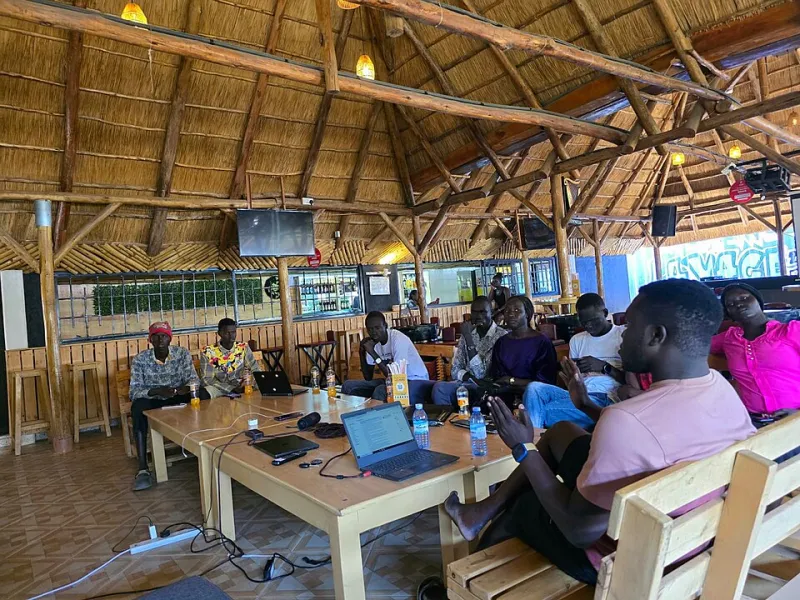
In Richmond, Virginia, a neighborhood health equity organization hosts what it calls "community diagnosis sessions"—gatherings that deliberately invert the traditional public health model. Rather than presenting residents with data gathered by outside researchers, facilitators begin with open-ended questions and extended listening. Participants are encouraged to draw on personal experience, family history, and collective memory. Only after this initial process of articulation does the organization begin to consider how, or whether, existing research frameworks might be useful.
The results have consistently surprised outside observers. Residents frequently identify causal relationships that standard epidemiological models overlook—connections between specific histories of municipal disinvestment and present-day chronic illness, for instance, or between the closure of particular institutions and the acceleration of neighborhood instability. These are not insights that appear in census data. They are insights that live in the knowledge of people who stayed.
In Los Angeles, a coalition of immigrant-led organizations has developed a parallel practice they call "story mapping," in which community members collectively reconstruct the sequence of events and decisions that produced current conditions. The process is explicitly historical and explicitly political. It asks not only what is happening but who made it happen, and when, and why. The resulting maps become organizing tools—but they also become a form of counter-documentation, a community-authored record that stands alongside and often contradicts the official version.
When the Name Changes, the Power Shifts
The consequences of this reclamation are not merely symbolic. When communities name their own problems, they also implicitly name their own capacities, and this reframing has measurable effects on the kinds of interventions that gain traction.
Consider the difference between a community that accepts the label "high-crime neighborhood" and one that insists on describing itself as "a community that has been systematically denied the resources necessary for safety." The first framing invites policing. The second invites investment. Both may be responding to the same underlying conditions, but they authorize entirely different responses—and they locate responsibility in entirely different places.
Organizers who have worked in this space for years are careful to note that the work is neither simple nor without conflict. Naming circles frequently surface disagreements within communities about how to characterize shared experiences. Generational differences, political divergences, and varying relationships to institutions all shape how individuals understand and articulate their circumstances. Facilitating this process with integrity requires significant skill and a genuine commitment to holding space for dissent.
But practitioners argue that this internal complexity is itself valuable. The friction of collective naming forces communities to develop shared frameworks rather than simply adopting the nearest available external one. It builds what some organizers describe as "interpretive infrastructure"—a community's capacity to make sense of its own experience on an ongoing basis, not just in response to a single crisis.
What Funders and Institutions Must Reckon With
For philanthropic institutions and government agencies accustomed to setting the terms of engagement, this movement presents a genuine challenge. Grant applications require problem statements that fit predefined categories. Policy programs are designed around standardized definitions of need. The machinery of institutional support is built, in large part, on the assumption that the institution knows what the problem is before it arrives.
A growing number of advocates are calling on funders to restructure their processes in ways that honor community-generated framing. This means accepting problem definitions that do not map neatly onto existing program areas. It means tolerating ambiguity and resisting the impulse to translate community language into bureaucratic language before the ink is dry. It means, in short, relinquishing a form of control that institutions have rarely had to consciously examine.
Some foundations have begun to experiment with trust-based philanthropy models that reduce reporting requirements and allow grantees greater latitude in defining their own work. These experiments are promising, but advocates note that structural change requires more than adjusted paperwork. It requires a fundamental rethinking of who is presumed to hold knowledge worth acting on.
The Word as the First Act
There is a reason that so many traditions of liberation—political, spiritual, artistic—begin with an act of naming. To name something is to claim a relationship with it. It is to assert that you have stood close enough to understand it, that your understanding matters, and that you will not be governed by someone else's description of your own life.
The communities engaged in this work understand that reclaiming the language of their struggles is not a preliminary step before the real work begins. It is the real work, or at least its necessary foundation. Solutions built on borrowed diagnoses tend to serve the institutions that issued them. Solutions built on community-generated understanding have a chance to serve the people who actually need them.
The naming circle on Chicago's South Side has continued to meet. Its work has informed a community land trust, a resident-led health monitoring initiative, and a sustained campaign to reframe a local budget conversation. None of these outcomes were predictable from the outside. All of them were named, first, from within.