What We Call Ourselves: The Quiet Revolution of Community Self-Naming
There is a moment, familiar to many who have lived at the margins of American civic life, when you encounter your own neighborhood described in terms you do not recognize. A city planning document calls it a "transitional corridor." A real estate listing rebrands it as an "emerging district." A news segment refers to it by a name no longtime resident has ever used. In each instance, the same implicit message is delivered: someone else holds the authority to define where you live, and by extension, who you are.
Across the country, a growing number of communities are refusing that bargain.
From historically Black neighborhoods in the South reclaiming names erased by urban renewal to Indigenous coalitions insisting on the use of their own place-names on public signage, from immigrant enclaves in the Midwest formally adopting new collective identities to LGBTQ+ organizations developing internal naming ceremonies that mark community milestones—a diverse and energetic movement of linguistic self-determination has taken root in American civic culture. These efforts are rarely covered as a unified phenomenon, yet they share a foundational conviction: that the power to name is the power to exist on one's own terms.
The Politics Embedded in Every Label
Language has never been a neutral instrument. Scholars of rhetoric and political philosophy have long argued that naming is among the most consequential acts a society performs—that to name something is to frame how it is perceived, valued, and governed. Communities that have been subjected to external naming understand this viscerally.
Consider the history of American neighborhood nomenclature. Entire sections of cities were designated "slums" or "blighted areas" by municipal planners in the mid-twentieth century, language that was then used to justify the demolition of thriving communities under the banner of urban renewal. More recently, the term "gentrifying neighborhood" has been applied to communities that residents themselves describe as stable, rooted, and culturally rich—language that anticipates displacement rather than acknowledging vitality.
The stakes are not merely symbolic. Zoning decisions, funding allocations, insurance rates, and media coverage all flow, in part, from how a place is named and categorized. When a neighborhood is labeled "high-risk," that designation shapes the resources it receives, the businesses willing to invest there, and the stories told about the people who call it home. Self-naming, then, is not vanity. It is strategy.
Ceremonies of Reclamation
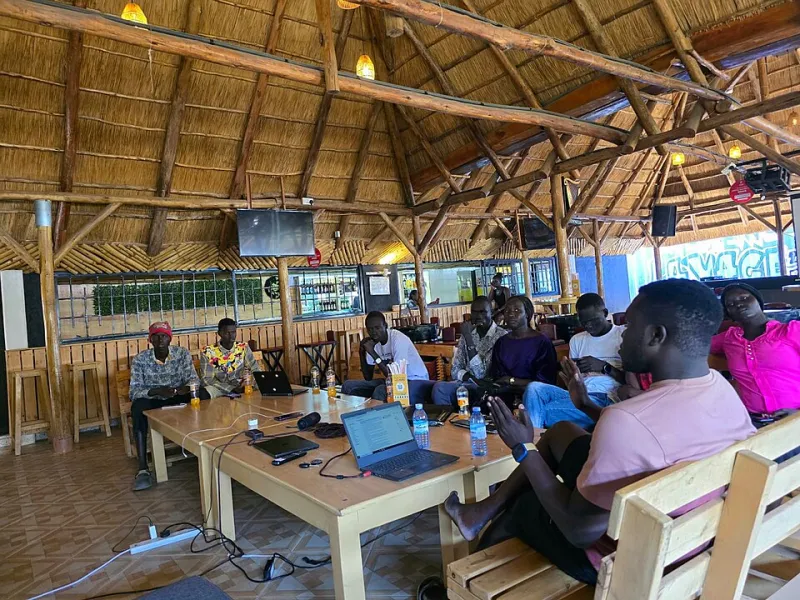
In several cities, community organizations have begun formalizing the act of naming through public ceremonies that blend cultural tradition with civic assertion. These gatherings—sometimes called naming circles, identity councils, or reclamation assemblies—bring together longtime residents, community historians, elders, and younger generations to deliberate collectively about what a place or group should be called, and why.
In one Southern city, a neighborhood association spent more than a year in community meetings before formally adopting a historical name that predated the urban renewal era, replacing the bureaucratic designation that had appeared on city maps for decades. The ceremony that followed was not merely celebratory. It included testimonies from elders who remembered the original name, readings from historical archives, and a formal petition to the city council to update official records. The council ultimately complied—a small but meaningful acknowledgment that community voice carries legitimate authority.
In the Pacific Northwest, a coalition of Indigenous nations worked alongside municipal officials to restore traditional place-names to parks, waterways, and public spaces that had been renamed during the colonial period. The process required not only political negotiation but deep internal deliberation about which names carried the most cultural weight and how they should be rendered in public-facing materials. The result was a dual-naming framework that placed Indigenous names alongside English ones—a compromise that some members found insufficient, but which others celebrated as a visible assertion of presence.
Naming the Self, Not Just the Place
The practice extends beyond geography. Across faith communities, cultural organizations, and advocacy groups, deliberate acts of collective self-naming have become a way of marking identity transitions and asserting values.
Several mutual aid networks, born during the pandemic years and now operating as permanent fixtures of their communities, have engaged in formal naming processes that involved broad membership input. Leaders within these organizations describe the naming exercise as foundational—a way of establishing shared ownership from the outset. "When everyone has a say in what we're called," explained one organizer in the Midwest, "they feel like they built something together. The name becomes a kind of covenant."
Similar dynamics play out within immigrant communities navigating the question of what to call themselves in American public life. Some groups have moved away from country-of-origin designations in favor of pan-ethnic or regional identities that better reflect the diversity within their communities. Others have embraced hyphenated identities as deliberate political statements, resisting the pressure to assimilate into a flattened American category. These choices are rarely made lightly. They are the product of sustained conversation about history, aspiration, and the kind of recognition each community wishes to claim.
The Resistance to External Definition
Not everyone in authority welcomes these movements. City governments have sometimes resisted renaming petitions, citing cost, administrative burden, or the preferences of other constituencies. Media organizations have been slow to adopt community-preferred terminology, defaulting instead to language that reflects the perspectives of developers, law enforcement, or municipal officials. In some cases, the imposition of external names has accelerated precisely as communities have organized to resist it—a phenomenon visible in the wave of real estate rebranding that tends to follow the emergence of strong neighborhood identity movements.
These pressures make the work of community self-naming more urgent, not less. Organizations like the Advancement Project and the National Congress of American Indians have documented the ways in which naming rights intersect with broader struggles over land, governance, and political representation. Their research reinforces what community organizers have long known: that the fight over what something is called is rarely only about words.
A Language Built From the Inside
What distinguishes the most effective self-naming efforts is not the boldness of the names chosen but the depth of the process through which they are chosen. Communities that invest in deliberate, inclusive, historically grounded naming practices tend to emerge with something more durable than a new label—they emerge with a strengthened sense of collective purpose.
The naming circle, in this sense, is not merely a cultural event. It is a form of democratic practice, a rehearsal of the kind of self-governance that communities are simultaneously demanding in every other domain of civic life. To sit together and decide what we shall be called—to weigh the history embedded in words, to honor the voices of those who came before, and to choose language that reflects the community's own understanding of itself—is to exercise a form of sovereignty that no external authority can fully grant or permanently revoke.
At a moment when so many Americans feel spoken for rather than heard, communities that are choosing their own names are doing something quietly radical. They are insisting that the first word in any honest account of who they are must come from them.