Ceremonies of Becoming: The New Traditions Immigrant and Refugee Communities Are Forging in American Soil
There is a ceremony performed each spring in a community center in Clarkston, Georgia—a small city outside Atlanta that has been called the most ethnically diverse square mile in America—that does not appear in any liturgical calendar, any cultural handbook, or any official guide to American civic life. It was invented, six years ago, by a group of Congolese, Burmese, and Somali women who had arrived in Clarkston as refugees and found, upon their arrival, that there was no ritual to mark what they had survived, no formal occasion to acknowledge what they were becoming.
They created one.
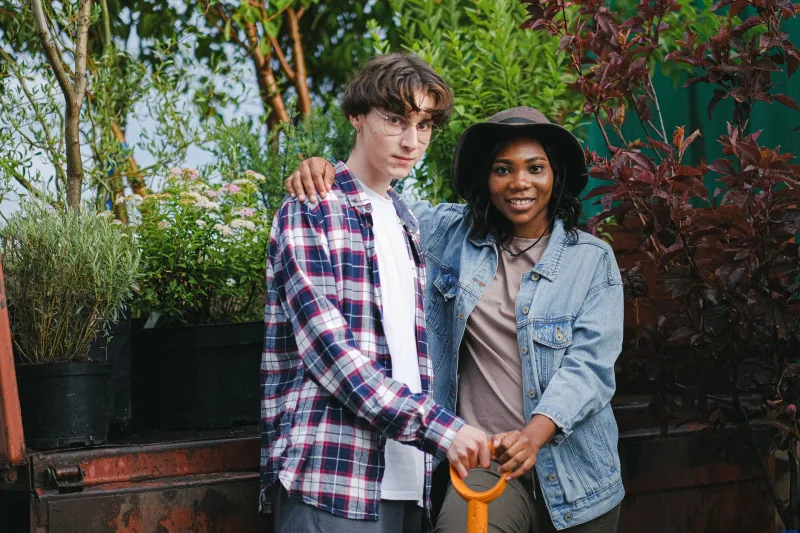
The ceremony, which the women call "the Planting," involves each family bringing a seed or a small cutting from a plant that carries meaning in their culture of origin. The seeds are planted together in a shared garden plot behind the community center. There are spoken blessings in multiple languages, a shared meal, and a moment of silence for those who did not survive the journey. Children born in America participate alongside grandparents who remember other continents. The whole thing takes about three hours, and it is, by any honest accounting, one of the most genuinely American things happening in this country.
The Ceremonial Void
The experience of immigration and forced displacement involves a cascade of transitions—departure, passage, arrival, resettlement—that are among the most profound ruptures a human life can sustain. And yet American civic and cultural life offers almost no formal ceremonial infrastructure to acknowledge these transitions. The naturalization ceremony, with its scripted oath and its distribution of small American flags, is the closest the state comes to marking the moment of formal belonging. For many new Americans, it is experienced as deeply inadequate—a bureaucratic procedure dressed in the borrowed clothes of ritual.
"The naturalization ceremony tells you that you are now American," says Dr. Priya Anand, a cultural anthropologist at Emory University who has spent a decade studying ritual practice among immigrant communities in the American South. "It does not tell you what to do with everything you were before. It does not help you grieve what you left, or celebrate what you carried, or make sense of who you are becoming. Communities are filling that gap themselves, and they are doing it with remarkable creativity."
What these communities are creating is not a replacement for their heritage traditions, nor an adoption of mainstream American ceremonial forms. It is something genuinely new: a hybrid ceremonial culture that holds multiple inheritances simultaneously, that marks American milestones through cultural lenses that mainstream institutions do not provide, and that asserts, through the very act of ceremony-making, that these communities are not passive recipients of a culture handed to them. They are active makers of their own.
Milestones Reimagined
The range of occasions that immigrant and refugee communities are marking with invented or adapted ceremonies is striking in its breadth. First days of school—a milestone of particular weight for families who have experienced interrupted education through displacement—are celebrated in Somali American communities in Minneapolis with gatherings that blend Islamic blessing practices with the exchange of school supplies as communal gifts, transforming a logistical transition into a collective affirmation of educational aspiration.
In Vietnamese American communities across California's Central Valley, families have developed elaborate ceremonies to mark the moment when a child becomes the first in their family to apply to college—a milestone that carries enormous cultural significance but that American institutional life does not formally recognize. These ceremonies often involve the reading aloud of the application essay by the student, followed by spoken reflections from elders about the sacrifices that made the moment possible. They are, simultaneously, celebrations of individual achievement and acts of communal memory.
In Houston's sprawling Honduran American community, neighborhood associations have begun marking the anniversary of families' arrival dates with small ceremonies they call "second birthdays." The date of arrival in the United States is treated as a birth into a new life—acknowledged with cake, photographs, and the telling of the arrival story by whoever in the family experienced it most vividly.
"My mother cried when we started doing this," says Claudia Mejia, 38, a community organizer who helped establish the practice in her neighborhood. "She said she had spent twenty years trying to forget the day we arrived because it was so hard. Now she tells the story every year. It's become something she's proud of instead of something she survived."
Heritage as Raw Material
What is particularly striking about these invented ceremonies is the sophistication with which communities draw on their heritage traditions—not as fixed scripts to be reproduced, but as living resources to be adapted and transformed. Ceremonial elements are selected, modified, combined, and sometimes deliberately set aside, as communities negotiate which aspects of their cultural inheritance are portable to an American context and which require reinvention.
A Karen community in Fort Wayne, Indiana, has developed a ceremony to mark the completion of English language study that draws on traditional Karen harvest festival practices—communal food preparation, circle singing, the wearing of specific colors—while incorporating distinctly American elements, including the reading of a passage from the U.S. Constitution in both Karen and English. The resulting ceremony is neither Karen nor American in any pure sense. It is something that could only exist in this community, in this city, at this particular moment in history.
"Culture is not a museum," says Pa Saw, a community elder who helped design the ceremony. "It is a living thing. When you bring it to a new place, it grows new branches. That is not betrayal. That is how culture survives."
Ceremony as Civic Participation
There is a political dimension to these ceremonial practices that deserves explicit recognition. In a country where immigrant and refugee communities are frequently subjected to narratives of deficiency—stories that frame them as problems to be managed rather than citizens to be welcomed—the act of creating one's own ceremonies is an assertion of cultural sovereignty. It declares, without ambiguity, that these communities are not waiting for permission to belong. They are constituting belonging through their own creative and communal labor.
Moreover, many of these ceremonies are explicitly oriented toward civic life. They mark not only personal milestones but civic ones: first votes cast, first community meetings attended, first neighborhood association memberships. In doing so, they weave civic participation into the ceremonial fabric of community life, signaling to younger generations that engagement with American public institutions is not an assimilation concession but a continuation of the tradition of community self-governance that many of these families practiced in their countries of origin.
"We had community councils in our village in Liberia," says Emmanuel Kollie, a community leader in Minneapolis who helped establish a ceremony marking first-time voters in his community. "We knew how to govern ourselves. Coming to America didn't change that. The ceremony is us saying: we bring that with us. We are not starting from zero."
The Garden in Spring
Back in Clarkston, the Planting ceremony has grown since its founding. What began with three families now draws more than forty, representing a dozen countries of origin. The shared garden plot has expanded. New families bring new seeds, new blessings, new languages. The ceremony has no fixed liturgy, no single authority who determines what belongs and what does not. It evolves each year, shaped by whoever shows up.
This, perhaps, is its most essentially American quality—not the flags or the civics lessons or the official ceremonies of the state, but the improvised, collective, stubbornly hopeful act of people building something together in a new place, using whatever they carried with them, refusing to wait for someone else to tell them when they have arrived.