Where Families Govern Themselves: The Rise of Domestic Deliberation as a Form of Grassroots Justice
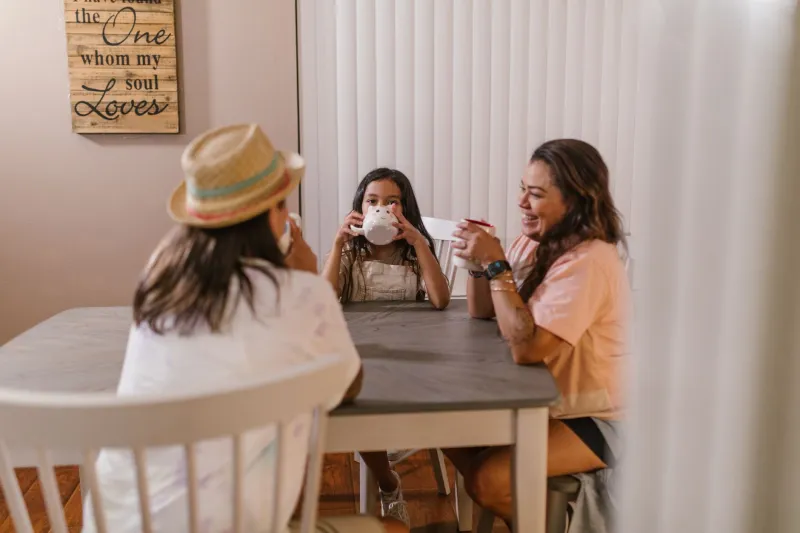
In a two-bedroom apartment in Cleveland's West Side, a family of five convenes every Sunday evening around a folding table that doubles, on weekdays, as a homework station. The agenda is written on a legal pad in the handwriting of the eldest daughter, age fourteen. The youngest child, age seven, is permitted to speak first. No one interrupts. This is not a therapy session, nor a court-mandated intervention. It is simply how this family has chosen to govern itself—and, increasingly, it is how a growing number of American households are choosing to do the same.
The notion that justice is something dispensed from above—by judges, arbiters, institutions—has long dominated the American imagination. Yet a diffuse and largely undocumented movement is quietly complicating that assumption. Families across racial, economic, and geographic lines are developing their own frameworks for resolving disputes, assigning accountability, and arriving at something that resembles, however imperfectly, reconciliation. These practices vary enormously in form: some are highly structured, others nearly improvised. But together, they represent a meaningful departure from the default posture of American conflict resolution, which has historically meant either suppression or litigation.
The Inadequacy of Formal Systems—and the Vacuum They Leave
For many families, the turn toward internal deliberation is not ideological but practical. The American legal system, even in its civil and family court iterations, is expensive, slow, adversarial by design, and frequently experienced as retraumatizing by those who navigate it. Divorce proceedings that stretch across years. Custody disputes that transform children into exhibits. Property disagreements between siblings that dissolve lifetimes of relationship into depositions and counter-filings. The formal apparatus of legal resolution often produces outcomes that satisfy procedural requirements while leaving the actual human wound entirely unaddressed.
Community organizations working in family mediation have long understood this gap. Groups like the Community Mediation Maryland network, or the many neighborhood justice centers operating across cities from Atlanta to Seattle, have offered facilitated mediation as an alternative for decades. What is newer—and in some ways more radical—is the move by families themselves to internalize these principles without institutional scaffolding. They are, in effect, building their own courtrooms from available materials: a kitchen table, a shared commitment to listening, and a willingness to remain in relationship even when it is difficult.
Protocols Born From Necessity
The families pioneering these practices rarely describe themselves as activists or reformers. They are parents who grew exhausted by shouting matches that resolved nothing. They are adult siblings who watched an inheritance dispute nearly sever a family permanently. They are couples who recognized that their children were absorbing lessons about conflict—lessons that would follow those children into their own adult lives and relationships.
In Portland, Oregon, one family developed what they call their "council protocol," borrowed loosely from indigenous talking-circle traditions they encountered through a local nonprofit offering cultural education programming. A designated object—in their case, a smooth river stone—is passed around the table. Only the person holding the stone may speak. There is no cross-examination, no rebuttal in the moment. Each person speaks to their own experience. The family credits this practice not only with defusing several significant disputes over the past three years, but with fundamentally changing the emotional vocabulary their children use when they encounter conflict at school.
In a suburb of Atlanta, another family—a blended household navigating the particular complexity of stepparent relationships—created a written charter of household values after attending a workshop offered by a local faith-based community organization. The charter is not legally binding, of course. Its authority is entirely relational. But it functions as a shared reference point, a document the family returns to when disagreements arise about fairness, responsibility, or the allocation of resources and attention. "We stopped arguing about who was right," the stepmother explained to a facilitator at a follow-up session, "and started asking whether what we were doing matched what we said we believed."
What These Practices Teach About Justice
There is something philosophically significant in what these families are enacting, even when they would not frame it in those terms. They are, collectively, advancing a vision of justice that is relational rather than transactional—one that measures success not by the production of a winner and a loser, but by the preservation and even deepening of the relationship itself. This stands in sharp contrast to the adversarial architecture of the American legal system, which is structurally optimized to produce a verdict rather than an understanding.
Civic advocates who work at the intersection of restorative justice and community organizing have noted this convergence with considerable interest. The principles animating family deliberation circles—accountability without punishment, acknowledgment of harm, collaborative repair—are precisely the principles that restorative justice practitioners have been attempting to introduce into schools, criminal courts, and neighborhood dispute resolution processes for decades. What is striking is the degree to which families are arriving at these principles independently, through lived necessity rather than theoretical persuasion.
This matters because democratic culture is not primarily constructed in legislatures or courtrooms. It is constructed in the spaces where people first learn to negotiate competing needs, to tolerate disagreement without resorting to domination, and to understand that their own perspective is not the only legitimate one. The family is, in this sense, the original civic institution—and what happens within it shapes the civic imagination that citizens bring to every larger arena.
The Ripple Effect Into Communities
The implications extend outward in ways that are already becoming visible. Several families interviewed by community organizations in the Midwest reported that the deliberative skills cultivated at home had changed how they participated in neighborhood association meetings, school board discussions, and local advocacy efforts. Children raised in households that model structured dialogue are, by multiple accounts, more capable of engaging productively with difference when they encounter it in broader social contexts.
Nonprofit organizations working in civic education have begun taking notice. Some are developing curricula that explicitly connect household conflict resolution to broader democratic competencies, arguing that the kitchen table is not separate from the public square but continuous with it. If communities wish to build cultures of genuine dialogue—cultures capable of sustaining the difficult, slow work of collective governance—they might do well to ask what is being practiced, and taught, in the most intimate spaces of American life.
A Justice That Belongs to the People
None of this is to suggest that formal legal systems are unnecessary or that families should be left without recourse when conflicts involve genuine harm or power imbalances. The domestic sphere carries its own risks of informal coercion, and any honest account of family deliberation must acknowledge that not all households are safe spaces for equal voice. The practices described here are most meaningful when they emerge from relationships of genuine mutuality—and most dangerous when they become mechanisms for the powerful to manage the grievances of the less powerful without accountability.
But within those important limits, what these families are building deserves recognition as a form of civic practice. They are insisting, in the most personal of registers, that justice is not something administered to people but something people can learn to practice together. That conviction—fragile, imperfect, and profoundly human—may be among the most important things any community can cultivate.