Rocking Chairs Against the Algorithm: Why the Front Porch Is America's Best Answer to Loneliness
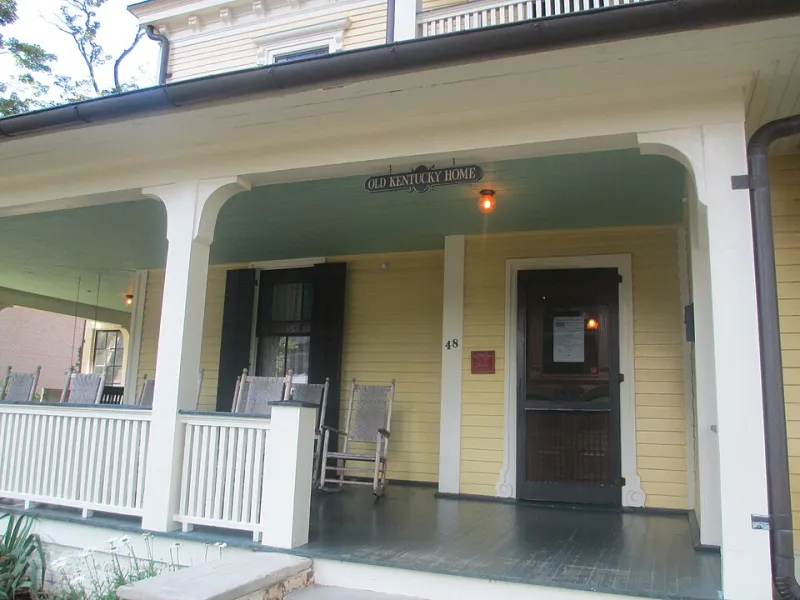
Photo: Billy Hathorn, Public domain, via Wikimedia Commons
Here is a modest proposal for a nation drowning in connectivity: sit outside.
Not on a patio hidden behind a fence. Not in a backyard reserved for invited guests. On the front porch — that half-public, half-private threshold where Americans once conducted the daily, unremarkable business of belonging. I believe, and a growing chorus of neighbors, musicians, and urbanists agrees, that the porch revival now flickering across the country may be the most accessible remedy we have to the loneliness epidemic the Surgeon General formally declared in 2023.
We Built Our Way Out of Company
The decline of the porch was not accidental. Air conditioning pulled families indoors. Television pulled them further. And mid-century zoning and design conventions — garage-forward houses, setbacks designed for cars rather than conversation — finished the job. We engineered serendipity out of our streets, then wondered why we felt isolated.
The costs are now measurable. Americans report fewer close friendships than any generation on record. Parents describe scheduling playdates like business meetings. The average American spends over seven hours a day on screens and, by some accounts, under fifteen minutes in genuine face-to-face conversation with a neighbor.
The porch cannot fix all of this. But it lowers the activation energy of connection to nearly zero. You do not need an invitation to wave. You do not need an agenda to remark on the weather. The porch makes presence visible, and presence is where every relationship begins.
The Revival Is Already Here
Consider PorchFest, the neighborhood music festival that began in Ithaca, New York, in 2007 and has since spread to hundreds of communities from Somerville, Massachusetts, to Phoenix, Arizona. The premise is beautifully simple: local musicians perform on porches, neighbors wander between sets, and the street becomes a venue. No tickets. No gates. Just porches doing what porches do best — hosting.
In Minneapolis and St. Paul, informal "porch covenants" have emerged, where clusters of households agree to spend certain evenings outside together, drinks in hand, kids underfoot, no phones required. In older streetcar suburbs from Richmond to Portland, homeowners are renovating and rebuilding porches that mid-century remodels had demolished. Real estate listings now boast of them. Architects are sketching them into new construction.
This is not nostalgia. It is a quiet act of civic resistance against an economy that profits from our isolation.
The Objection, Answered
Skeptics will note that not everyone can afford a house with a porch, and they are right. Porch culture must not become another amenity of the comfortable. That is why the movement's most promising expressions are collective: shared stoops in multifamily buildings, front-lawn concerts in working-class neighborhoods, apartment balconies strung with lights facing a common courtyard. The principle is not the architecture. The principle is visibility and welcome.
Nor can porches substitute for policy. Housing that encourages density and walkability, public spaces that invite lingering, work hours that leave evening light for one another — these matter enormously. But policy moves slowly. A rocking chair moves tonight.
An Open Door Is a Political Act
There is something almost subversive about sitting where you can be seen. In a culture that trains us to curate our interactions, the porch offers uncurated company: the neighbor you would not have chosen, the conversation you did not plan. Democracy, it turns out, is practiced in these small encounters long before it is practiced at the ballot box.
So here is my argument, plainly stated: if you are lonely, and you are waiting for an app or an institution to fix it, you are waiting in the wrong direction. Walk out the front door. Pull up a chair. The revolution starts at the threshold.