Seven Boxes That Changed the Block: The Quiet Power of Community Book Exchanges
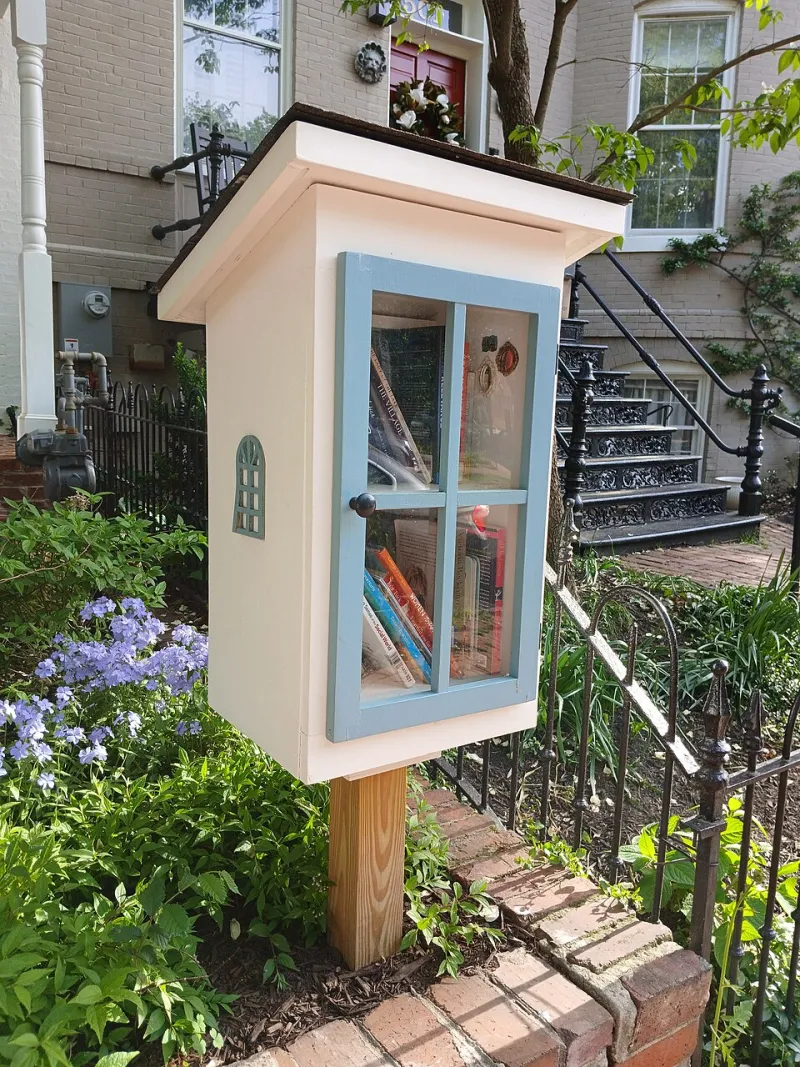
Photo: Ser Amantio di Nicolao, CC BY-SA 4.0, via Wikimedia Commons
It began, as many good ideas do, with a tribute. In 2009, Todd Bol of Hudson, Wisconsin, built a small schoolhouse-shaped box, filled it with books, and mounted it in his yard to honor his mother, a former teacher who loved reading. The gesture became Little Free Library, a nonprofit whose stewards now number well over 100,000 worldwide.
But the story has grown far beyond Bol's tribute. Across the United States, community book exchanges are mutating into something richer: literacy outposts, seed banks, oral history archives, and neighborhood gathering points. Here are seven models showing how a wooden box becomes an institution.
1. The Book Desert Outpost
In parts of Detroit, the Bronx, and rural Mississippi, researchers have mapped whole neighborhoods without a single bookstore — so-called book deserts. Community exchanges have become the front line. Volunteers in Detroit's Literacy for Life network stock curb-side cabinets with children's titles, prioritizing early readers because access in the first years of life predicts outcomes for decades. One steward keeps a log of which books vanish fastest; picture books about Black children, she notes, never sit long.
2. The Seed Library
In Tucson, Arizona, and dozens of towns besides, the exchange shelf holds packets alongside paperbacks. Seed libraries — often housed in the same cabinets or public library branches — lend heirloom seeds in spring, and borrowers return seeds from their harvest in fall. The result is a living, locally adapted agricultural archive, stewarded by gardeners rather than corporations.
3. The Story Archive
In New Orleans and Appalachia, some exchanges carry a second layer: handwritten neighborhood memories tucked into the books, or QR codes linking to recorded oral histories. Readers borrow a novel and, accidentally, a grandmother's account of the 1965 flood. The box becomes an archive that no institution ever thought to build.
4. The Little Free Pantry Hybrid
When pandemic-era hunger surged, thousands of stewards added shelf space for canned goods, diapers, and hygiene supplies. The hybrid model stuck. In Columbus, Ohio, one cabinet offers books above, pasta below — a quiet acknowledgment that a hungry child cannot read on an empty stomach.
5. The Multilingual Welcome
Along the Texas border and in Minneapolis's immigrant corridors, exchanges now sort by language: Spanish, Somali, Hmong, Vietnamese. New arrivals report finding their first English readers — and, more importantly, their first books in their mother tongue — in these boxes. Literacy advocates call it the cheapest bilingual education program in the country.
6. The Prison and Reentry Shelf
Some exchanges operate at the edges of the system. Volunteer groups in Pennsylvania and Oregon maintain lending collections for families visiting incarcerated loved ones, stocking children's books designed for read-alouds across visiting-room tables. Others place reentry resource guides — housing, expungement clinics, job boards — inside standard book cabinets.
7. The Weatherproof Gathering Point
Finally, the plainest model may matter most: the exchange as an excuse to meet. Stewards report that maintenance visits — refilling, straightening, wiping rain off spines — reliably produce conversations. The box is a third space in miniature, a reason to stand on the sidewalk and talk.
What the Boxes Teach Us
None of this required legislation, philanthropy, or a strategic plan. It required wood, paint, books, and the oldest American impulse there is: neighbors taking care of what institutions overlook. In a nation debating how to rebuild civic trust, the answer may already be standing at the corner — small, hand-painted, and open to anyone who walks by.